Covered Feeding Trial at Teys Charlton Set to Answer Some Big Questions
When cattle arrive at the Teys Australia Victorian feedlot, they are now divided for scientific purposes.

When cattle arrive at the Teys Australia Victorian feedlot, they are now divided for scientific purposes.
Cattle emerge from thick fog, walking along the yard rails in a big group.Next come the pen riders. They are rugged-up.
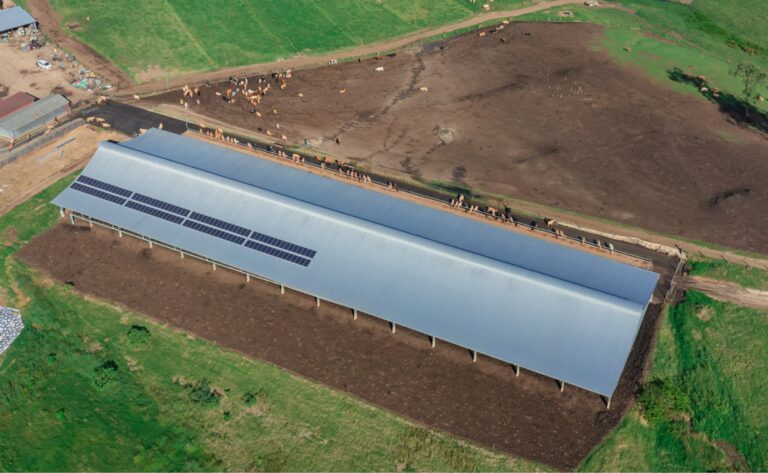
Big producing Australian dairy cows are more susceptible to heat stress than ever before, but scientists have proven that a multifaceted approach is the best way to stem milk losses.
Leaning on the edge of a concrete feed trough with his arms folded across his chest, Ben Giblett tips his head back slightly while contemplating his answer.
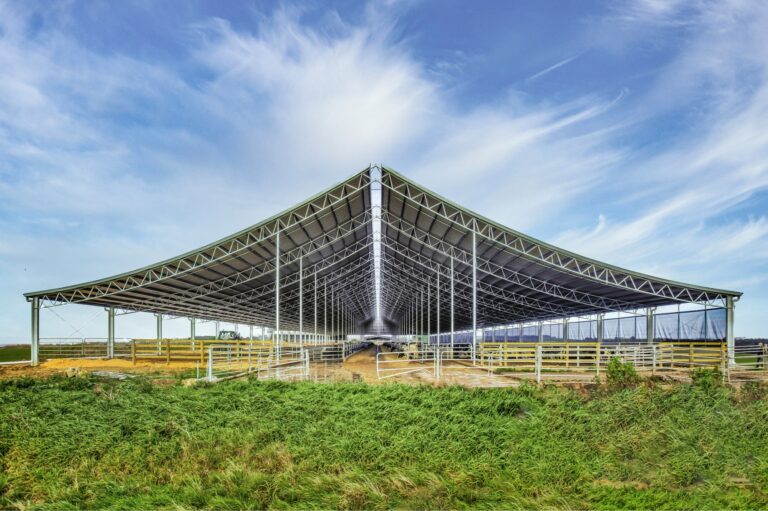
It’s a cool yet sunny day in the rolling coastal hills of south west Victoria.
Dairy cows – mostly black and white Holsteins – dominate the lush green landscape.
From the top of the hills you can see the vast expanse of sea on the far side of the famous Great Ocean Road.
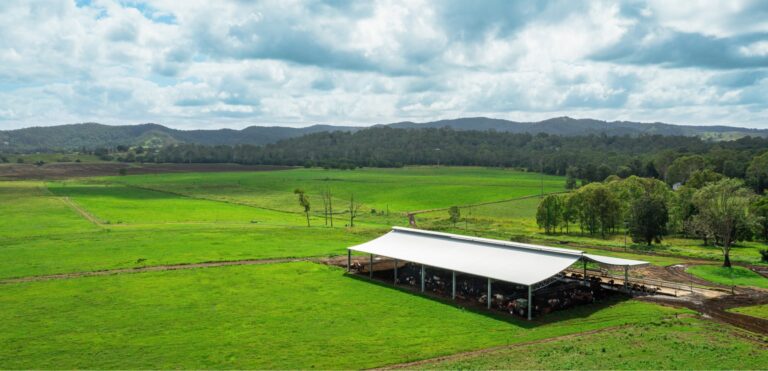
GRANT LEDGER’S dairy herd has a lot of freedom.
His family’s 220 Illawarra milking cows can choose to graze their lush Sunshine Coast Hinterland property.
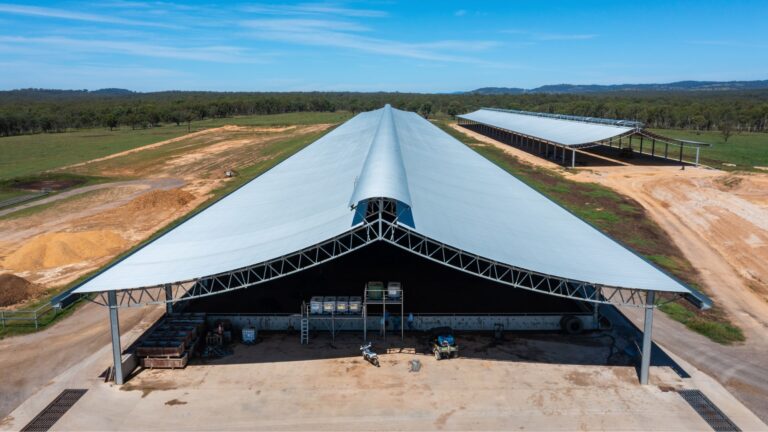
IT’S easy to see why Elbow Valley Beef customers are lost for words at a site visit.
Or anyone for that matter.
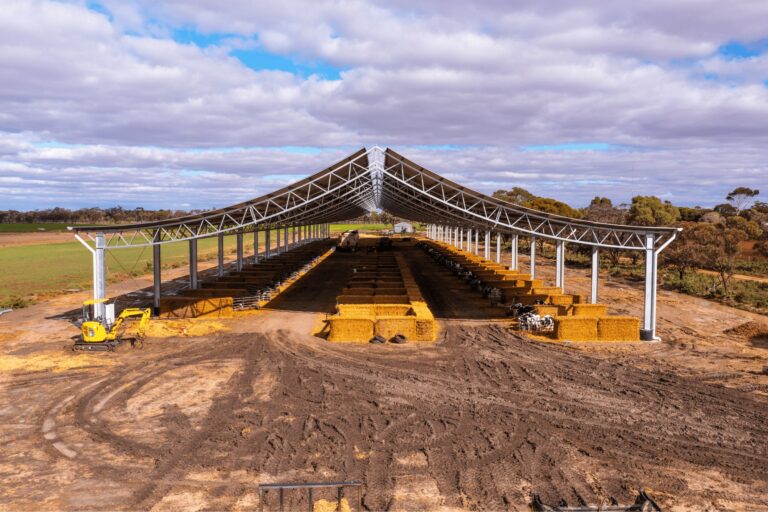
Every farmer knows the value of the next generation.
They are the future of the business and underpin profitability for years to come.
So, it’s no surprise that one Swan Hill dairy farmer has invested in his youth to ensure they fulfill their potential.
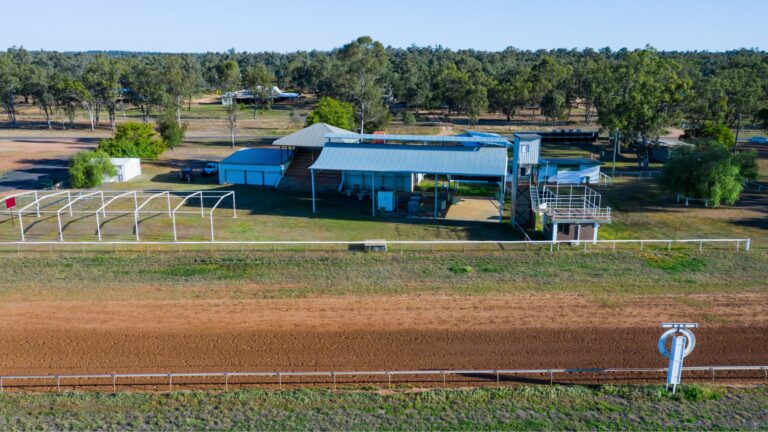
It’s easy to imagine the Clermont Race Club packed with revelers.
Bookies set-up beneath the Ridgeback™ shed, taking bets from egar punters.
Families with children catching up with friends on the lawn – in the shade – in front of the home straight.

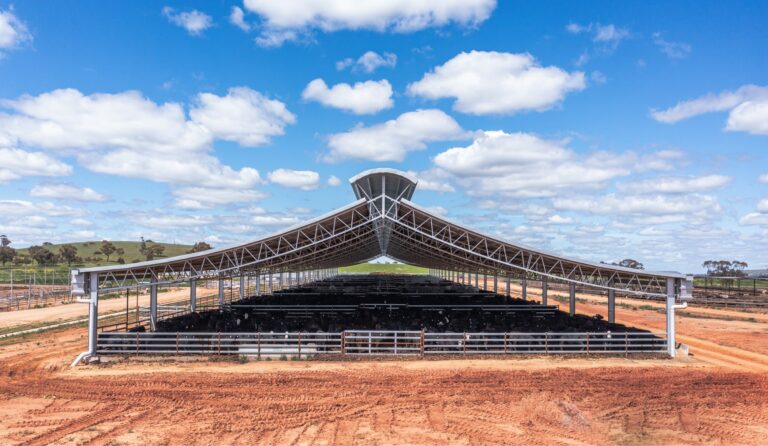
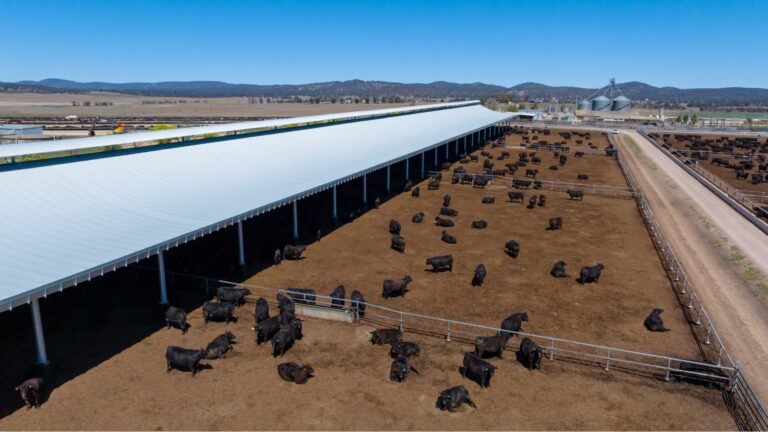
Rangers Valley Feedlot Manager Alex Smith was joined by University of Queensland Animal Production Lecturer Dr Angela Lees, AgDSA Director Matt Norton and Entegra, developers of the industry leading self-ventilating Ridgeback®.
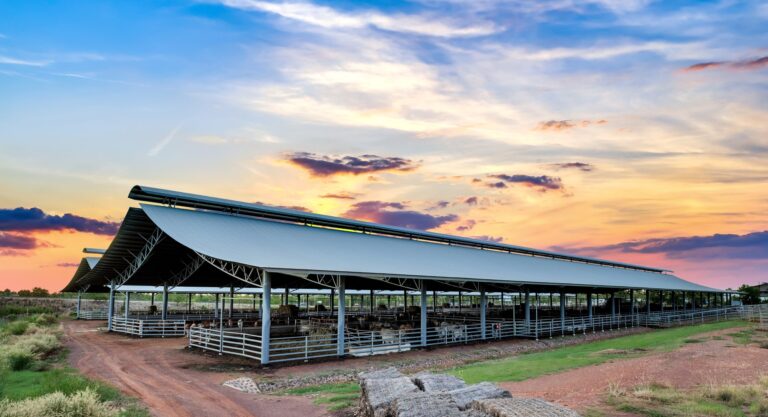
Ridgeback® offers a revolutionary design that significantly enhances airflow within its shelters. Tested by aerospace engineers, this innovative structure maximises air exchange, ensuring better ventilation and comfort for cattle.
Improved airflow helps mitigate heat stress, enhance animal welfare, and ultimately boosts productivity in feedlot operations.
Ridgeback® prioritises animal welfare, providing shade and shelter solutions that promote the well-being of cattle. With a focus on comfort, these structures shield livestock from harsh weather conditions, reducing heat stress and promoting overall health.
Scientific studies and industry research attest to the positive impact of Ridgeback® on animal welfare, ensuring content, comfortable, and thriving cattle within the feedlot environment.
Design & Engineering optimised from site visits and consultation.
Entegra preferences Australian materials & components
Entegra partners with industry groups to develop product solutions
Entegra prides itself on its ability to seamlessly connect clients with the very best in the industry
“Having healthy calves in our dairy business is integral to the end-point which is making milk,” he said. “If we can grow a stronger, healthier calf fast – at the start of her life – and maintain that growth throughout its life, it will be a bigger, healthier cow when she has her first calf. “So ultimately from that fact alone, we will be having a better cow in the herd so more dollars in our pocket.”
Through summer you get 40 degree days and the troughs are out in the open, they get direct sunlight and algal bloom. We try and mitigate that through trough blocks and cleaning troughs twice a week, however, there will also be a temperature rise in that water. Eight hundred kilo cattle don’t handle those sorts of environmental factors, there’s crowding and panting. However, standing underneath a Ridgeback™ , with the design, there’s a constant airflow, you get a nice, cool breeze. There’s a significant difference in the maximum day time temperature.”
“Happy cows produce more milk, it is as simple as that.” “And the cheapest feed we produce is what’s out in the paddocks, but in our climate they can’t graze all day long. It is too hot. That’s why when they are able to come back to the Ridgeback, it has made a big difference to how comfortable our cows are and the amount of feed our cows will eat.”
“The test (butterfat and protein) went up immediately,” Chad said. “There was a 0.2 per cent average increase across the fat and protein. They were eating more feed, obviously because they were more comfy. We had budgeted on the milk (litres) going up but didn’t budget on the test going up.”
“There were key drivers in improvement in hot standard carcass weights, improvements reflected in animal health - lower morbidity and mortality rates,” “We also were considering that our wood chip program, for bedding, that we have for our heavier cattle, there could be some offsets or (opportunities to) reduce that bedding structure in various depths because of the result of having a shelter structure. “So adding all those components up, and pen maintenance throughout the year - pens having less water, less erosion - that should reduce our maintenance costs.”
“We look at feeding efficiency, carcass weight and the animal’s health.” “With bedding in the shed, there’s less mud on the cattle,” “It’s a comfort thing and also for the (processing) plant, they won’t have to spend as much time washing the animal prior to slaughter.”