Shade and Shelter a “Shaw” bet for Wagyu Marbling Magic

Watch Project Video

  • https://www.youtube.com/watch?v=tMxmRRDohU4
  • https://www.youtube.com/watch?v=-WUa-d6jm4c
  • https://www.youtube.com/watch?v=v_bm-dW4mJs
  • https://www.youtube.com/watch?v=DB3ypN9l7rY

Key Points

Shade and Shelter a “Shaw” bet for Wagyu Marbling Magic

It’s easy to see why Elbow Valley Beef customers are lost for words at a site visit. 

Or anyone for that matter. 

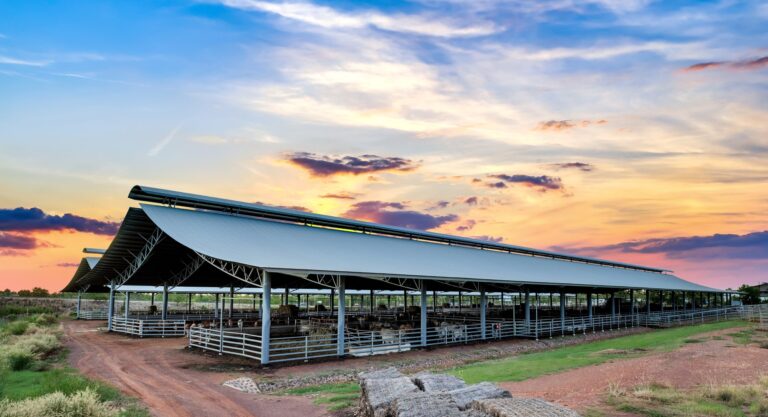
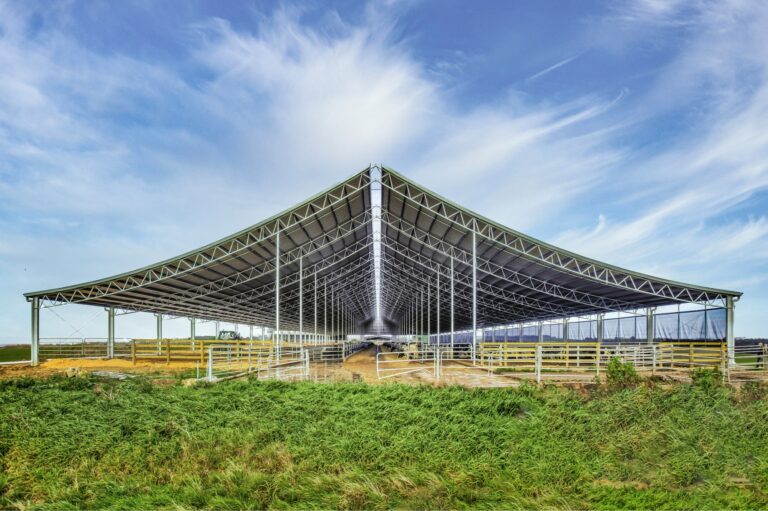
Stepping from the beating heat and glaring sun of Queensland into the shade of one of their Ridgeback® sheds – where their Wagyu are housed – you’d be forgiven for thinking the temperature had dropped. 

And someone had turned on a fan. 

But outside, it’s still 35 degrees celsius and the trees surrounding the Canning Downs South Feedlot are still. 

There’s not even a whisper of wind. 

But yet, in the pen with the Wagyu cattle, a slight cool breeze passes through. 

The cattle- they are unphased.  

Some are eating at the feed bunker, others are laying on the compost ground ,chewing their cud.. 

“Can you feel it?” Chris Shaw asks, referring to the cool airflow. 

“We had a customer – a long term player in the industry – when we brought him he just said ‘wow’. Even veterans of the industry, when they are standing here we have to drag them away to get in the car.” 

It’s not just the temperature and contentment of the cattle that’s mesmerising. 

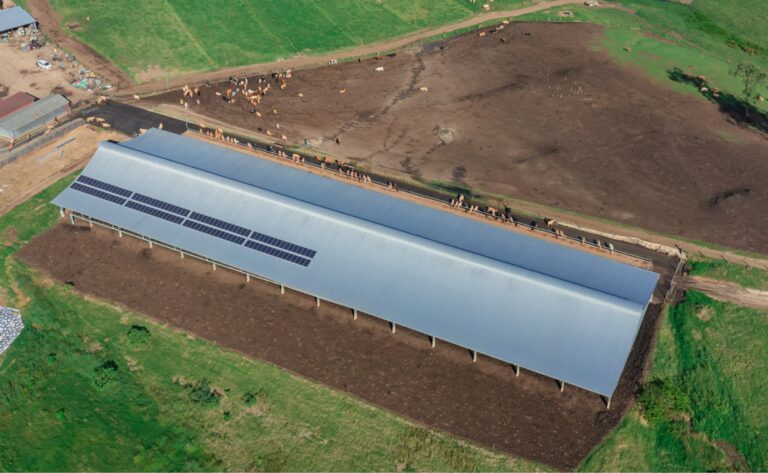
The entire structure – 420 metres long and …metres wide – is impressive. 

It looks like it blends into the landscape, and yet, simultaneously appears as though the Ridgeback®  stretches into the distance. 

But when you consider there’s another five? Ridgebacks®  strategically placed throughout the property, the sheer scale and quality of this operation begins to sink in. 

The Shaw family – owners and operators of Canning Downs South Feedlot and the suppliers of Elbow Valley Beef as well as the newly created specialised brands Sir Harry and Chauvel – will have 10,000 feedlot cattle under the cover of Ridgebacks®  soon. 

A national first – it is truly something to behold. 

Canning Downs South Feedlot has been an industry pioneer when it comes to shade and shelter. 

With the construction of its ….Ridgeback®  it will become the first feedlot to house all its cattle. 

“The whole story with sheds is about animal welfare, sustainability and the environment,” Chris said. 

“It’s not a gimmick, standing here you can’t smell anything, in a normal feedlot it would stink, there’s also not many flies. 

“Ultimately, that’s what our Chinese customer has latched onto, all of this, the sheds and the atmosphere of the property.” 

The Shaw family have owned and operated Canning Downs South since 1998. 

Originally part of the Cobb and Co staging route, Canning Downs South is  nestled on the “elbow” of the Condamine River, flowing north-west from the Slopes of Mt Superbus and south east of Warwick. 

Previously owned by two Australian war-time generals, it’s a pastoral property with a rich and intriguing 180-year history. 

Now, Canning Downs South Feedlot is a family integrated meat business, making a mark on the global stage. 

Chris and Susan Shaw work alongside their niece Sarah and nephews Jack and Chris, running their fully integrated Wagyu meat business. 

Family is a vital part of the businesses’ success. 

Everyone works together, using their own unique skills to add expertise to the business. 

Chris and Sarah sell the meat. 

Armed with a Business Management degree and a background in agricultural extension, human resources consulting and experience at one of Australia’s largest feedlots, Sarah also manages the administration of the feedlot, the documentation and logistics of the export meat business. 

She multitasks well. 

“I could be doing a health check in a pen or cleaning a water trough and organising a ship to go to China,” she joked. 

Her brother – also named Chris Shaw – is in charge of feeding. 

Chasing meat marbling, a constant intake of feed is vital for quality production and a consistent product. 

Jack Shaw’s role encompasses anything to do with livestock, from inductions, to exit cattle and everything in between. 

There’s cross-over between their roles and that’s what sets this business apart. 

The seamless way in which each sibling steps into another’s role and responsibilities to keep the business operating smoothly, is impressive. 

It’s a flexibility that can only come from family owned and operated businesses. 

And it’s this “dedication and passion” that the older Chris Shaw knows the Elbow Valley Beef customers appreciate. 

It’s also something they’ve come to expect. 

That’s why constant improvement underpins everything in the Shaw family’s business. 

Standing beneath one of the Feedlot’s many Ridgeback®  structures and admiring the Wagyu lazing on the compost bedding, it’s easy to think Canning Downs South Feedlot is in the cattle business. 

But they aren’t. 

Their business is “meat”. 

And it isn’t just any meat business. 

“In the Wagyu game, the only way to be in it, once you want to take the animals all the way through, is to have a branded beef business,” Chris Shaw explained. 

“Actually, we think of Wagyu not as meat, but as a luxury food item.” 

Selling boxed Wagyu directly to overseas customers has been an evolution of Elbow Valley Beef. 

Previously the business serviced contracts by providing a prescribed amount of “bodies” each week. 

Now, they operate along the entire supply chain and have long-term agreements with their customer. 

For them it makes it “more personal” while adding another “level of interest” to feedlot operations.  

It’s clear what the Shaw’s part of the deal is – delivering quality and consistent meat with high animal welfare and environmental outcomes. 

The Ridgebacks®  have been instrumental in all these outcomes. 

These constructions are the Shaws’ “point of difference”. 

“The animals, we feel, are a lot more comfortable under a shed, for shade and shelter,” Sarah said. 

“They also have environmental benefits, we capture all our water runoff and use the water. We don’t have any effluent implications and we also use deep pen litter – sawdust – to break down the effluent and that then has high value on our property when we spread it.” 

Elbow Valley Beef long-fed Wagyu has been supplying meat for the past two years. 

Progressively the marble-score of this beef has improved as more cattle have transferred to under Ridgebacks® . 

Each pen, beneath the Ridgeback® , has been designed to ensure every animal has the easiest access to feed and water. 

There’s a feed bunk and water trough at either side of the pens which means animals in the middle, only have 15 metres to walk to access either food or water. 

The pen bedding is 800mm thick – a compost – and has a “sponge-factor” that delivers a level of cleanliness and comfort that’s unrivalled in an outside environment. 

The comfort of the animal’s is evident each day when the younger Chris Shaw is delivering rations. 

“Doing the feeding-up and in the tractor, I have a good vantage point of the cattle under the Ridgeback®  sheds,” he said. 

“I notice a lot of the behaviour signs that show the cattle are content and comfortable. They are always lying down, unless they are eating, and there’s lots of licking of each other which shows companionship. They are not stressed out. And even on a hot summer day, you’d rarely notice any more than a couple at the trough. They are well watered and well fed.” 

It’s this stark difference between the management of cattle outside, compared to those under the shade and shelter of a Ridgeback®  that’s made huge improvements to welfare, according to Jack Shaw. 

“The largest point of difference between a traditional and a Ridgeback®  system, from a comfort point of view, is the extremes you get seasonally,” he said. “Winter and summer. Through summer you get 40 degree days and the troughs are out in the open, they get direct sunlight and algal bloom. We try and mitigate that through trough blocks and cleaning troughs twice a week, however, there will also be a temperature rise in that water. Eight hundred kilo cattle don’t handle those sorts of environmental factors, there’s crowding and panting. However, standing underneath a Ridgeback® , with the design, there’s a constant airflow, you get a nice, cool breeze. There’s a significant difference in the maximum day time temperature.” 

This same protection is also afforded to these cattle on the cold, misty and foggy winter mornings at Canning Downs South Feedlot. 

The compost bedding delivers comfort and heat, when combined with the body warmth of the animals, and this keeps cattle dry and warm when the temperature dips below freezing. 

Max Zhang is a customer of Elbow Valley Beef. 

His business IronBark Foods supplies Wagyu to restaurants and supermarkets in Asia. 

For Max, the scale of Canning Downs South Feedlot’s shade and shelter was surprising. 

“My first impression, I was like ‘okay this owner must be crazy, he’s spent a lot of money on something other people weren’t doing’,” Max said. 

“Now I see Chris is at the frontier, (he’s) had the vision and put his energy, time and money into something that no one was developing. We have a good result right now and I see the result with the Wagyu and the quality is getting better and better.” 

Max said there’s no comparison between Elbow Valley Beef and other Wagyu feedlots. 

“What we buy from this feedlot we have realised the quality is better than most of the people (who feedlot) outside,” he said.  

“We’ve found out the tenderness, flavour and also the marble-score is also higher than the average.” 

Thanks to his close relationship with the Shaw family, Max understands that some of this flavour, consistency and tenderness in the Elbow Valley meat can be attributed to the shelter provided for the cattle. 

But his customers – they focus on something completely different. 

“All they care about is the brand,” Max said. 

“The brand is very important, (when) people see the brand, they know it is from Canning Downs South. This is very important for the market. People can remember a good piece of steak, a good brand.” 

The same could be said for good animal welfare, environmental practices and even a good feedlot. 

It’s something that sticks with you. 

Healthy, happy cattle are memorable. 

But, finding the words to describe a 10,000 head totally sheltered feedlot in the midst of a picturesque Southern Downs valley – well that’s best left to those who know it best. 

“There’s not many places you can pull-up every 20 metres and have a spectacular view,” Sarah Shaw explained. 

“We get a bit used to working here, it probably means we are a bit spoiled, but it is pretty amazing.” 

See Other Projects

Contact Us Now