Are sheds the key to feedlot expansion?
It was a wet start to spring in Victoria’s Wimmera which meant cattle in the Charlton feedlot’s traditional outside yards were spread out.
Reducing stocking density is a management tool used to reduce mud in winter.
Similarly, in summer, cattle are “tightened-up” in the yards to limit dust.
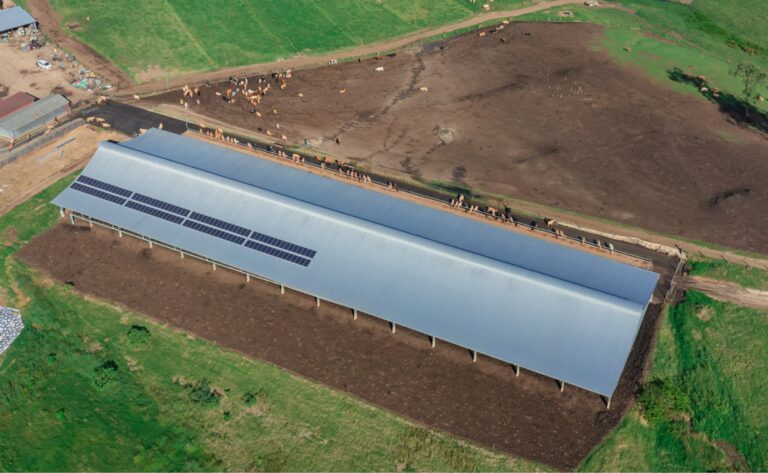
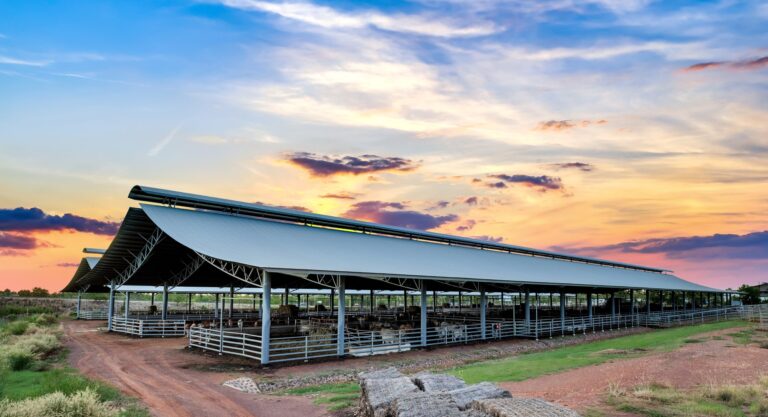
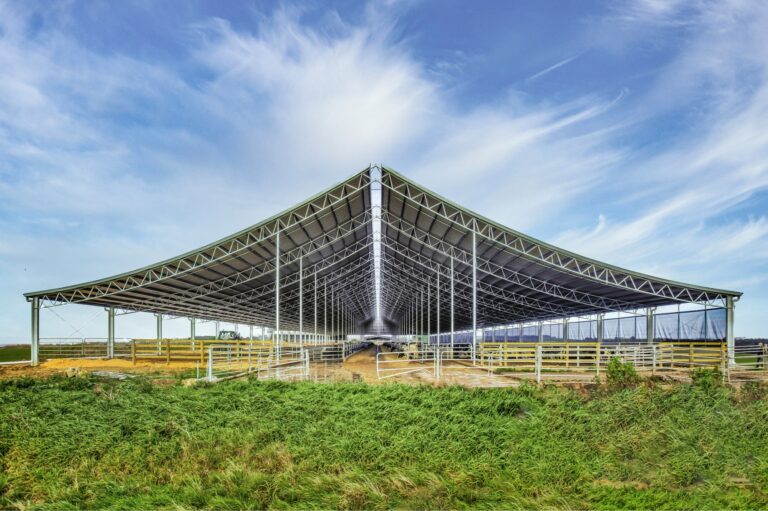
But given the reduced stocking rate on the feedlot this winter, it meant the cattle housed under the Ridgeback® were stocked at “almost double” their outside equivalent.
At 6 square metres a head under the Ridgeback®, the cattle stocking density was within national guidelines and, most importantly, Ash said they looked “very, very happy” to be out of the rain.
Weather aside, Ash said housing cattle under a roof could be an option to feed more cattle without having to expand the feedlot.
He said this could be good news for the industry as there are strict regulations for the development of feedlots.
“It could be a way of expanding numbers on feed without growing the footprint of your feedlot,” Ash said.
“Having more cattle on the same area, within the same boundary, without physically spreading. There’s potentially more efficienciences too.”
Exploring options for expansion comes off the back of a strong few years for Australia’s feedlot industry.
The number of cattle on feed in Australia continues to remain at historically high levels.
The Australian Lot Feeders’ Association and Meat and Livestock Australia reported almost 1.2 million cattle on feed in Australia from April to June, the second highest period of time on record.
The most cattle on feed in Australia was earlier this year – from January to March.