BeefEx Wrap
Building a Ridgeback®: The benefits outweigh the cost. The results of the Rangers Valley trial, where partially covered housing in the final 100 days boosted cattle performance – as presented by Dr Melissa George at BeefEx’s R&D session.
• Exclusive Beef Ex publication – Beef Up Your Cattle’s Protection
• Video brochures loaded with Ridgeback® insights from existing clients
• Come by booth 60 and 61 and meet our team and existing clients
• A report will be shared each day highlighting key points from the seminars
THINKING about adding shade and shelter to your feedlot?
Or keen to expand your commodity storage?
You might just be exploring infrastructure options, investigating what’s available and what’s worked for others, because you have something in mind for the coming years.
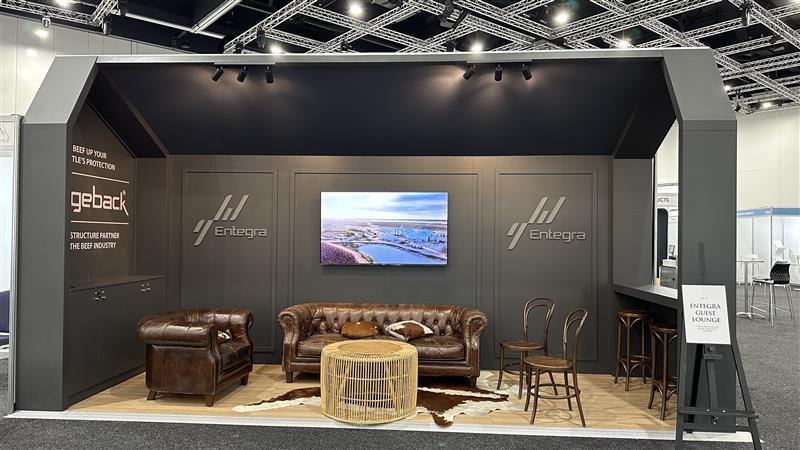
If this sounds like you, why not visit the Entegra guest lounge at BeefEx, Brisbane.
The Entegra team will be at booth 60 and 61 and available to talk through your ideas, explore concepts and share information.
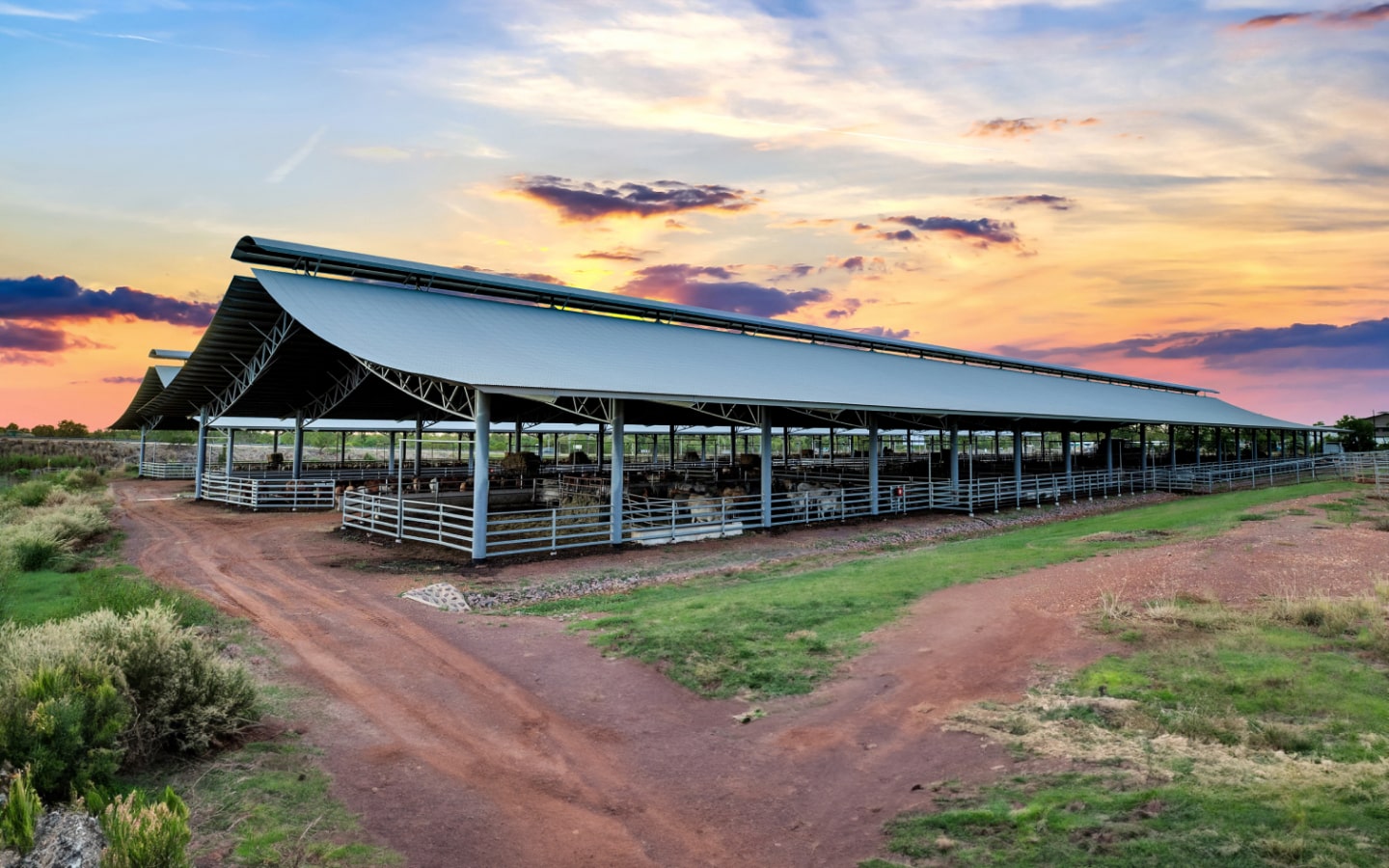
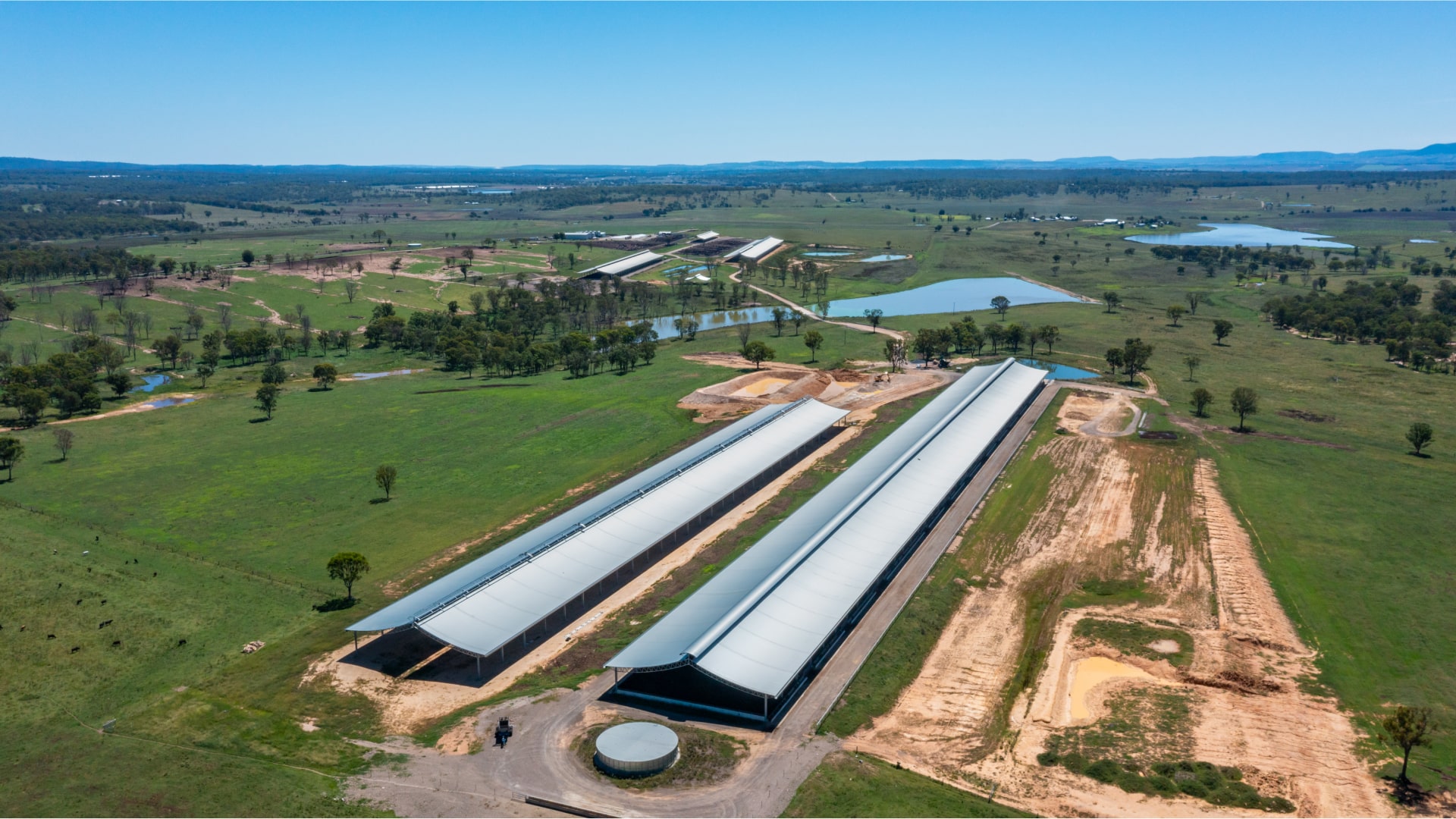
Entegra has worked with the feedlot sector for years, constructing its Ridgeback® shelters throughout eastern Australia.
And these feedlots are reaping the rewards from the industry-leading shade and shelter.
Entegra Director Greg McCalman said some feedlots had been working with Ridgeback® shelters for years and they are seeing the return on investment.
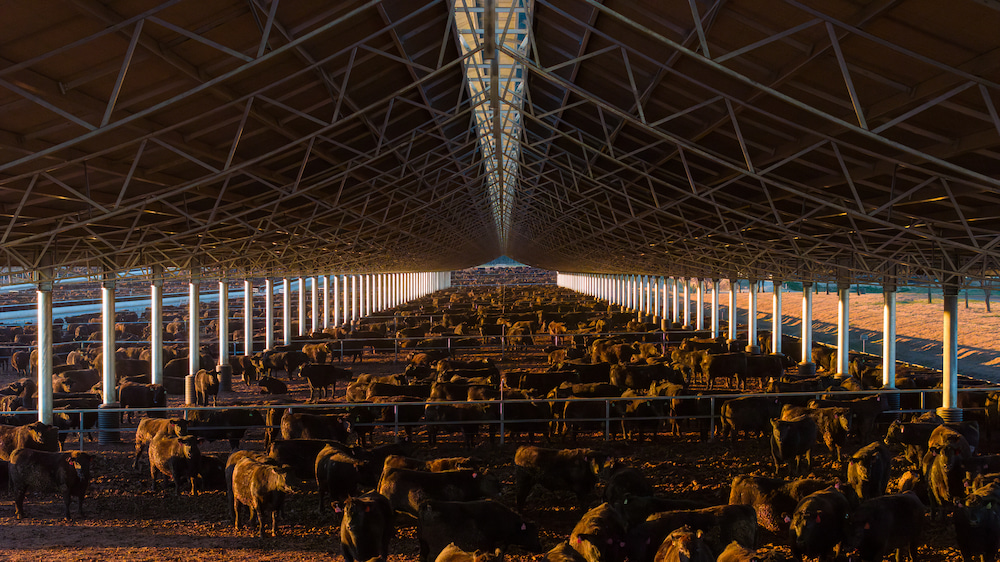
“Improved animal welfare is the biggest change – and the most noticeable – animals are kept cool, with the breeze flowing through the Ridgeback® and out of the elements,” he said.
“Our customers know that happy, healthy animals are the most productive and these benefits are returning to the business through better yields and quality. In addition, feedlots have reported increased operational efficiencies thanks to the Ridgeback® and decreased input costs.”
The Entegra customer lounge will have video case studies telling the story of Ridgeback® success at other feedlots and the Entegra team on-hand to talk through individual plans and infrastructure requirements.
Entegra will be celebrating the grain fed beef industry all week at the industry’s premier conference BeefEx.
Find us at booth 60-61, Royal International Showgrounds- Halls A & B, Foyer & Plaza. 600 Gregory Terrace, Bowen Hills, Brisbane.
Are you looking to upgrade your feedlot’s infrastructure and improve cattle welfare? Look no further than Beef Up Your Cattle’s Protection, the ultimate guide to shade and shelter solutions for feedlots. This essential read, brought to you by Entegra, showcases how their patented Ridgeback® shelters are revolutionising cattle comfort with innovative design and superior protection against harsh weather conditions.
With research-backed benefits like improved animal welfare, increased productivity, and reduced costs, Ridgeback® technology is a game-changer. Whether you’re dealing with summer heat or winter rains, this guide will walk you through real-world case studies and the science behind these industry-leading shelters.
Get your copy at BeefEx while stocks last—this is a must-read for any forward-thinking operator!
Shelter is one of the best ways a feedlot can reduce its heat load risk.
And the more shelter per standard cattle unit (SCU) – the better.
That’s according to the feedlot industry’s Heat Load Index (HLI) Risk Analysis Program (RAP).
Every Australian feedlot operating under the National Feedlot Accreditation Scheme (NFAS) must have a heat load action plan.
A HLI is central to a feedlots’ heat load action plan, it determines the management and assessment of heat stress.
Quirindi Veterinary Group’s Dr David Frith told the Australian Lot Feeders’ Association (ALFA) Animal Health and Welfare Workshop at Moama, NSW that the ‘HLI threshold’ for each group of cattle is calculated according to the RAP. Within the RAP, certain values are associated with animal or feedlot “risk adjustment factors”.
For example, the standard reference animal has a HLI threshold of 86.
This animal is a Bos taurus, with a black coat, healthy, without implants and is in a pen without shade – these are its risk adjustment factors.
Risk Adjustment Factors – including shade, the number of water troughs, coat colour, pen aspect, days on feed – are all attributed a value and move the standard reference animal HLI threshold higher or lower.
A white coat colour adds three points to the HLI – pushing it up to 89 – and suggesting this animal would be lower risk or more heat tolerant that the reference animal.
Dr Frith told the crowd at Moama that the provision of shade – 3-5 metres squared per Standard Cattle Unit (SCU) would add seven to the HLI threshold animal Shade at the equivalent of 2-3 metres squared per SCU adds ve to HLI threshold animal , while 1.5-2 metres squared shade per SCU is worth an extra three.
Feeding Bos indicus-cross (Droughtmaster, Santa Gertrudis) cattle adds eight to the HLI, while Wagyu lifts the threshold HLI by four.
Alternatively, Wagyu cattle on feed for more than 300 days drops the HLI threshold by two, with the HLI threshold slipping four for Bos tauras animals on feed for more than 151 days.
Dr Frith said calculating shade provisions involved working out the metres squared of shade at midday, before dividing it by the number of cattle in the pen (SCU).
He said there were new RAP factors for covered pens under development.

Building a Ridgeback®: The benefits outweigh the cost. The results of the Rangers Valley trial, where partially covered housing in the final 100 days boosted cattle performance – as presented by Dr Melissa George at BeefEx’s R&D session.

ONE global food integrity expert has praised Australia’s feedlot quality assurance program, crediting it for market access benefits and assisting the entire global beef industry’s social licence.