BeefEx Wrap
Building a Ridgeback®: The benefits outweigh the cost. The results of the Rangers Valley trial, where partially covered housing in the final 100 days boosted cattle performance – as presented by Dr Melissa George at BeefEx’s R&D session.
1. Industry Tour Insights
2. Increasing Cattle on Feed
3. Teys Charlton Feedlot Upgrade
4. Benefits of Ridgeback™
5. Managing Weather Challenges
6. Higher Stocking Density
7. Reduced Odor
8. Importance of Bedding
9. ALFA Industry Tour
10. Regional Trends in Cattle on Feed
Up to 55 lot feeders learnt how a Ridgeback® “took the edge of winter” and delivered consistent year-round weight gain for one Victorian feedlot, as part of a recent industry tour.
This exploration of the upgrade at the Teys Charlton Feedlot came as the number of cattle on feed in Australia increased by 1.1 per cent to slightly more than 1.158 million, according to the Australian Lot Feeders’ Association (ALFA) and Meat and Livestock Australia (MLA).
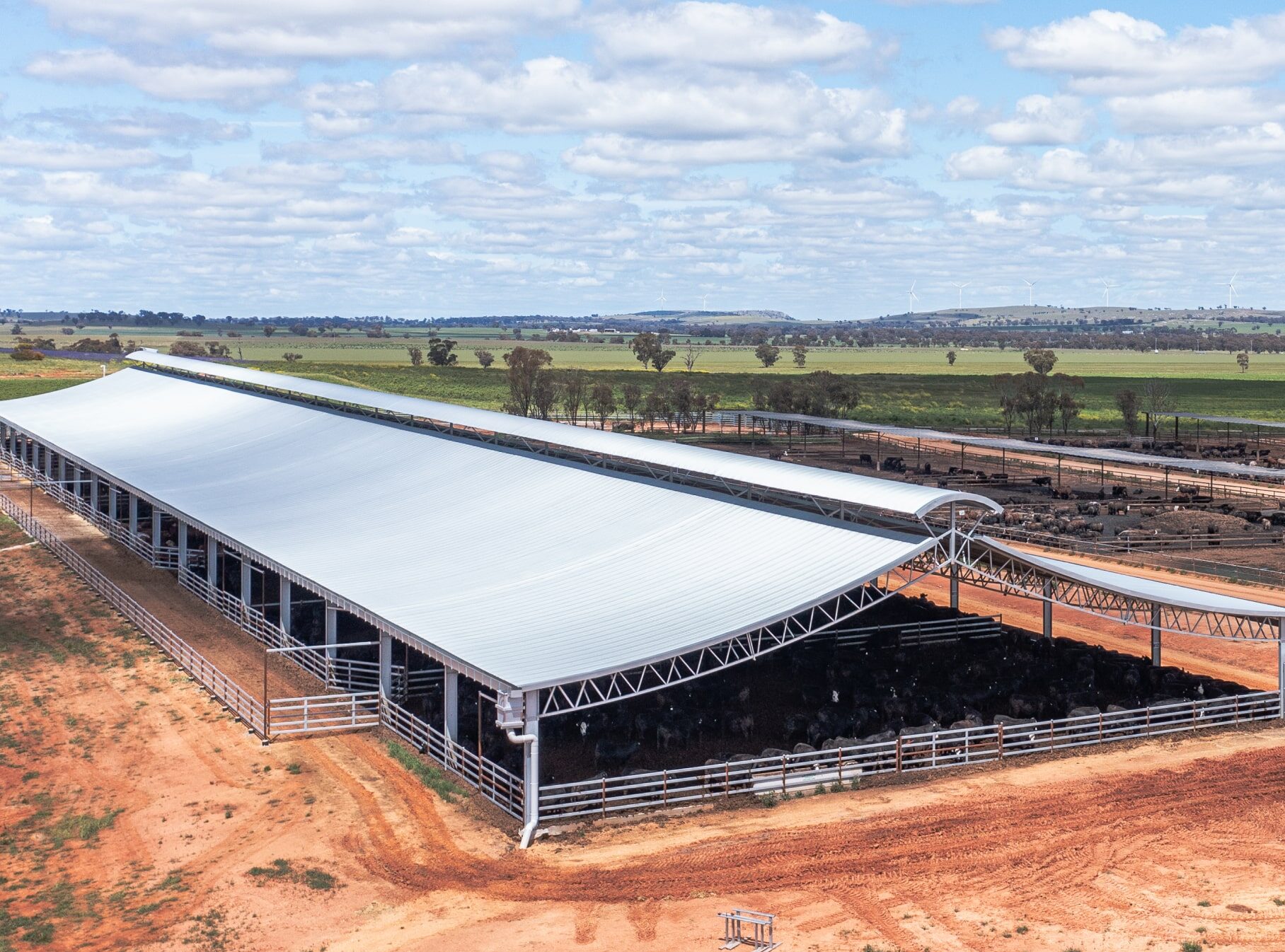
Charlton feedlot general manager Ash Sheahann told the ALFA “Going Under Cover” feedlot tour that half their 200 metre Ridgeback® shed was dedicated to hospital pens and the other to feeding cattle.
He said the Ridgeback® and straw bedding helped keep both lots of cattle dry and clean and this meant those in the hospital pens were recovering faster.
One example he provided was treating an animal with a foot abscess. He said opening a foot abscess and then returning that animal to a “wet pen” could cause infection. Now the hospital cattle are under the shelter of a Ridgeback® and bedded with straw, this hasn’t been a concern due to the “better environment”.
Ash told the tour that the biggest challenge for Teys Charlton was managing the cold, winter-dominant rainfall conditions and keeping pens dry and clean with only eight hours of daylight during the coldest months.
The Ridgeback® has enabled Teys to increase its feedlot capacity without physically expanding its footprint because the stocking density beneath its Ridgeback® is 6 metres squared per animal – half that of the outside pens.
This higher stocking density hasn’t impacted the site’s odour.
Ash said independent odour tests revealed that cattle housed beneath the Ridgeback® cause less odour on a “per head basis” than those outside.
He also told the crowd “getting the bedding right” under the Ridgeback® was the key to managing the higher stocking density – in the Charlton climate – and getting the payback from the shed.
The ALFA “Going Under Cover” feedlot tour included six site visits, throughout Victoria and South Australia, to feedlots utilising a variety of shelter and shade options.
It’s this part of the country that’s led the slight increase in numbers of cattle on-feed until the end of March, according to ALFA President Barb Madden. “We’ve seen improvements in numbers on feed in Victoria, NSW and WA – but a fall in Queensland has meant our overall national numbers remained steady,” she said.
Numbers on feed in Victoria, NSW and Western Australia increased by 29 per cent,, 23 per cent and 10 per cent respectively, while Queensland numbers dropped 4.6 per cent across the quarter.

Building a Ridgeback®: The benefits outweigh the cost. The results of the Rangers Valley trial, where partially covered housing in the final 100 days boosted cattle performance – as presented by Dr Melissa George at BeefEx’s R&D session.

ONE global food integrity expert has praised Australia’s feedlot quality assurance program, crediting it for market access benefits and assisting the entire global beef industry’s social licence.