Helping cow health
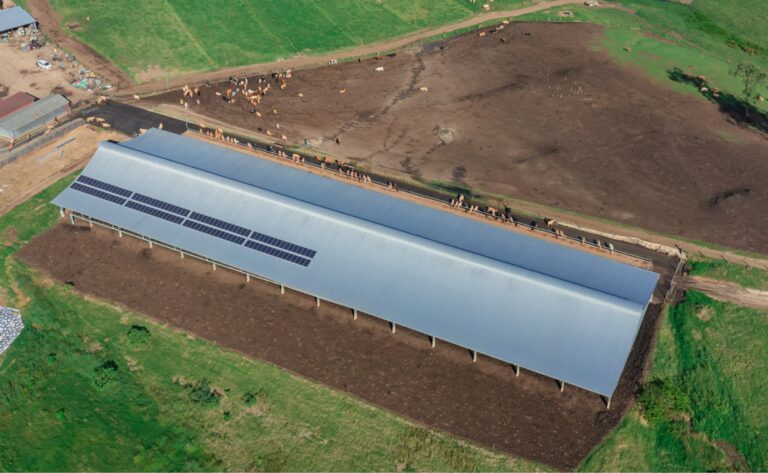
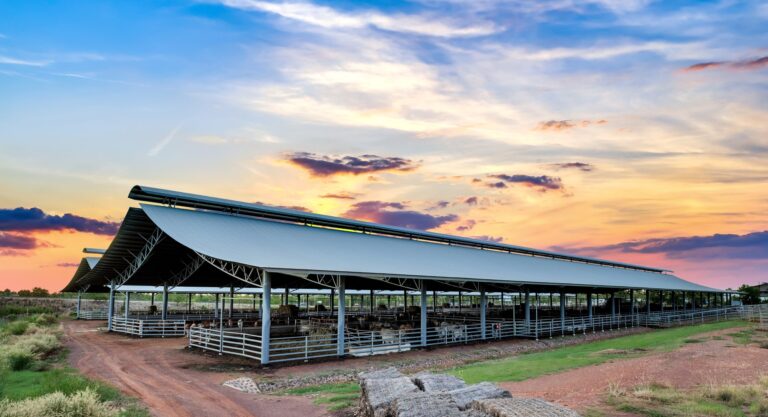
The Ledgers’ 60m by 30m Ridgeback® has been in operation for 3.5 years.
Apart from the additional milk and consistency in production,, animal health- specifically a reduction in mastitis cases – has been the biggest gain for the family business.
Before the Ridgeback® the dairy herd would get at least one case of mastitis a week – mostly environmental mastitis.
This was a result of cows grouping beneath trees and near water sources in the paddock – because of the heat – and the mud they’d cause from trampling the area and their closeness would spread disease, according to Grant.
Now, they are lucky to get one a month.
“One of the big effects of mastitis is that we’ve got to treat it with penicillin and once we have put penicillin into a cow we can’t sell that milk for seven days,” Grant said.
“So basically we are losing production for seven days every time a cow gets mastitis. That means dollars to us”
Grant believes the compost bedding beneath the Ridgeback® and the “sterile environment” they’ve created has reduced mastitis cases.
The compost has been a work in progress and gets aerated each day to keep it in top condition.
Woodchips formed the base of the compost and the cow’s have added manure over time.
“We keep stirring it up, aerating it, exactly the same as you would do any sort of compost pit,” Grant said.
“What that’s doing is it gets very hot under the surface and what we are doing by turning it over we are bringing up what was hot underneath, and all the bugs in it are being sterilised, so basically the cows are sitting in a sterile environment.”
A canopy to the side of the Ridgeback®, across the top of a feedpad, provides shelter for the cows as they eat.
It also keeps feed away from the sterile composted area.
Effluent from the feedpad area is captured and used to fertilise cropping paddocks, reducing input costs, while the composted area is refreshed by the daily aeration.