BeefEx Wrap
Building a Ridgeback®: The benefits outweigh the cost. The results of the Rangers Valley trial, where partially covered housing in the final 100 days boosted cattle performance – as presented by Dr Melissa George at BeefEx’s R&D session.
ONE major Australian meat processor no longer relies on electricity from the grid and coal, while reusing 100 per cent of its water at its Queensland plant.
And these changes – as well as working towards zero waste to landfill – means it’s become the first large-scale beef processing facility in Australia, and potentially the world, to receive Carbon Neutral certification through Climate Active.
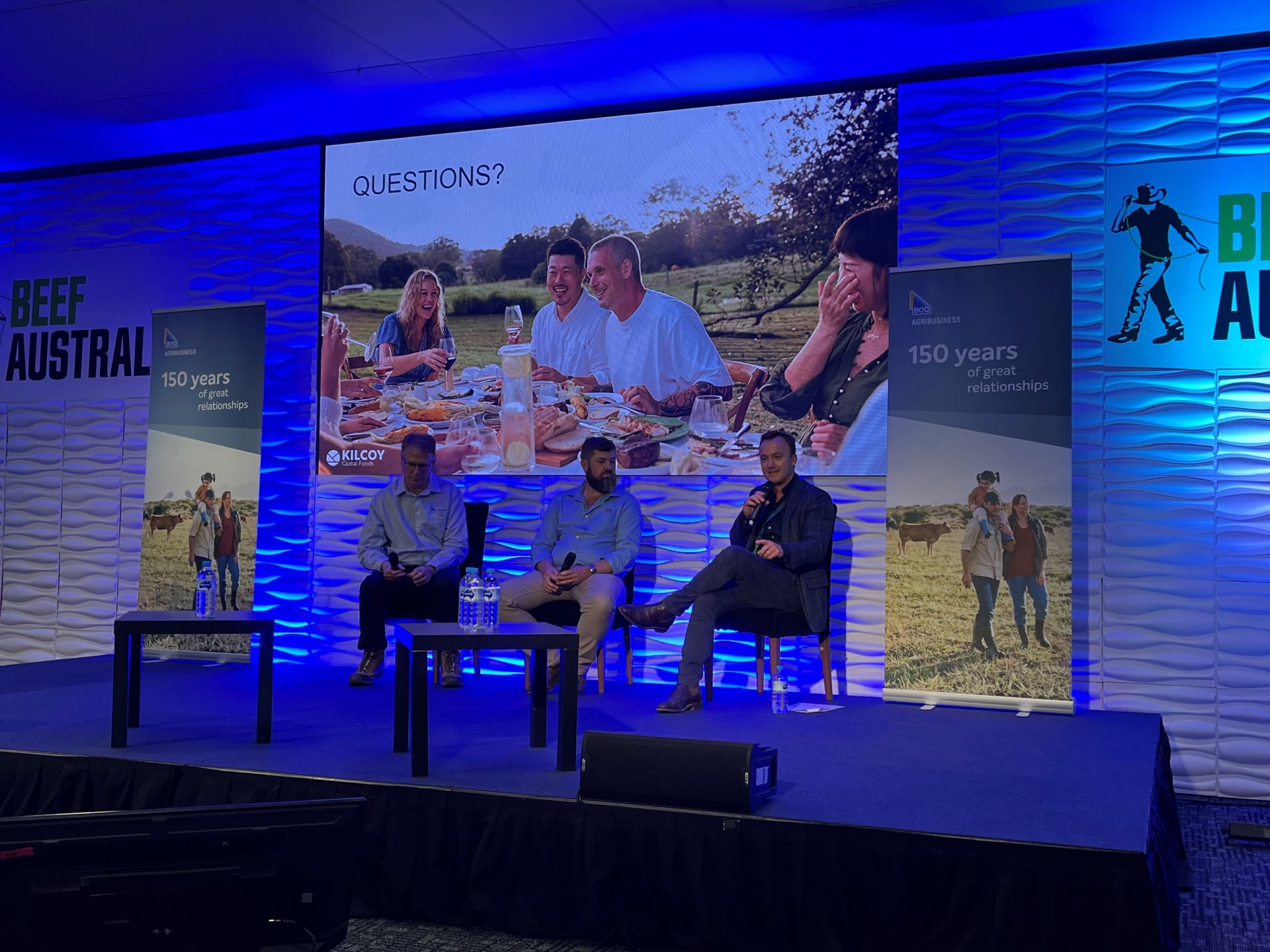
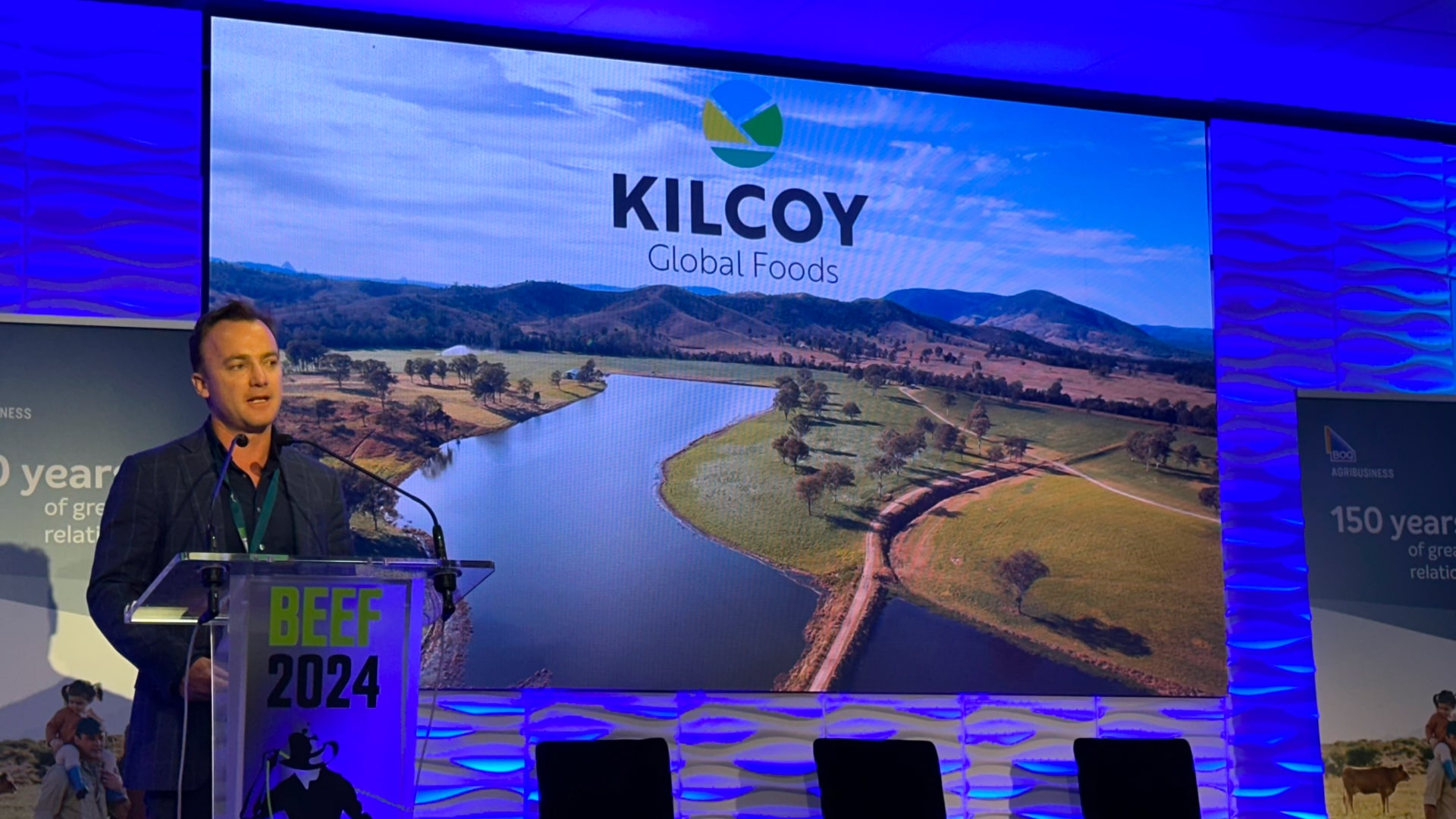
Kilcoy Global Food’s Senior Vice President of the Australian Northern Division Fearn Cholerton told a Beef Australia seminar this week at Rockhampton that customers are now asking for more.
“Ten years ago we would have been speaking – more than likely – about animal welfare at a conference like this, but now we are getting asked more about our process than provenance,” he said.
“And it is becoming more important in regards to how, not only we communicate to our consumers and our brands, (but) also how we start to communicate to our stakeholders.”
Kilcoy’s Queensland meat processing plant achieved carbon neutral certification without the use of a “single offset”. Instead, environmental emissions were reduced by the business, Fearn explained.
Most of the 2.5 million litres of water a day that’s used at the Kilcoy processing plant is captured in covered anaerobic lagoons (CAL), treated with bacteria and the gases produced as a result of this process are used to power the plant.
Fearn said the methane gas captured by the CAL then goes through three generators that produce 80 per cent of the Queensland processing plant’s – a business that runs seven days a week, processes 1450 animals a day and about 500,000 a year. – electricity requirements.
These gases also help to heat the water used in the facility for animal welfare and food safety standards.
Other water from the processing facility is used to irrigate adjoining country where Kilcoy grows barley to use in its new biomass boiler or hay to supply to local farmers.
The biomass boiler began operation last year and has removed the businesses reliance on coal for power generation.
The biomass boiler is powered by sustainable products such as the homegrown barely and wood chips – made from recycled meat pallets from Kilcoy.
A large-scale solar system provides a secondary energy source for the meat processor.
Fearn explained to the seminar that “doing the right thing doesn’t necessarily come at a commercial advantage for an organisation”.
He expanded further during the seminar question time and said these changes were a “significant cost (that) don’t necessarily have operational payback” but in time would contribute to reducing operational costs such as electricity.

Building a Ridgeback®: The benefits outweigh the cost. The results of the Rangers Valley trial, where partially covered housing in the final 100 days boosted cattle performance – as presented by Dr Melissa George at BeefEx’s R&D session.

ONE global food integrity expert has praised Australia’s feedlot quality assurance program, crediting it for market access benefits and assisting the entire global beef industry’s social licence.