Capturing the cream with an investment for the future

Watch Project Video

  • https://www.youtube.com/watch?v=0ph_nGPyl6k

Key Points

Capturing the cream with an investment for the future

Capturing the cream with an investment for the future 

Every farmer knows the value of the next generation. 

They are the future of the business and underpin profitability for years to come.  

So, it’s no surprise that one Swan Hill dairy farmer has invested in his youth to ensure they fulfill their potential. 

And if their growth rates are anything to go buy – his decision is already reaping rewards. 

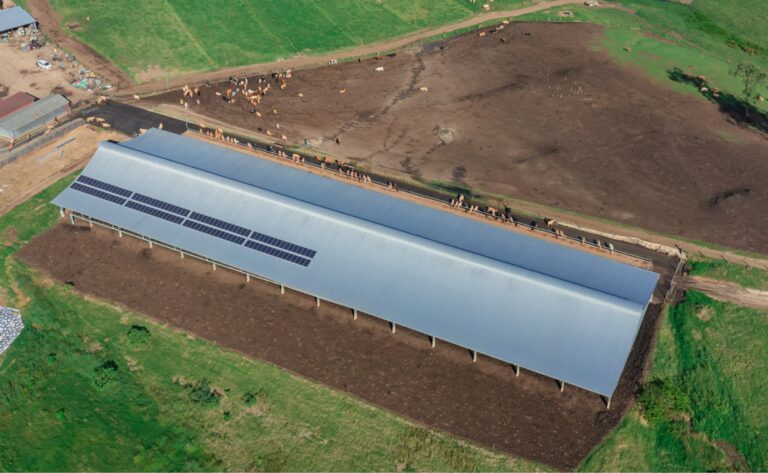
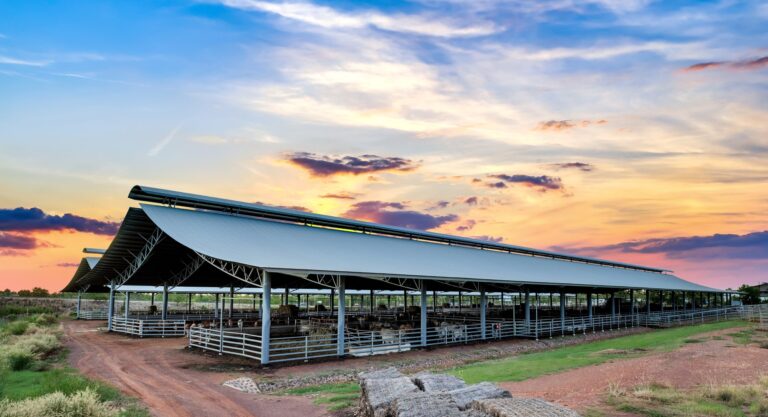
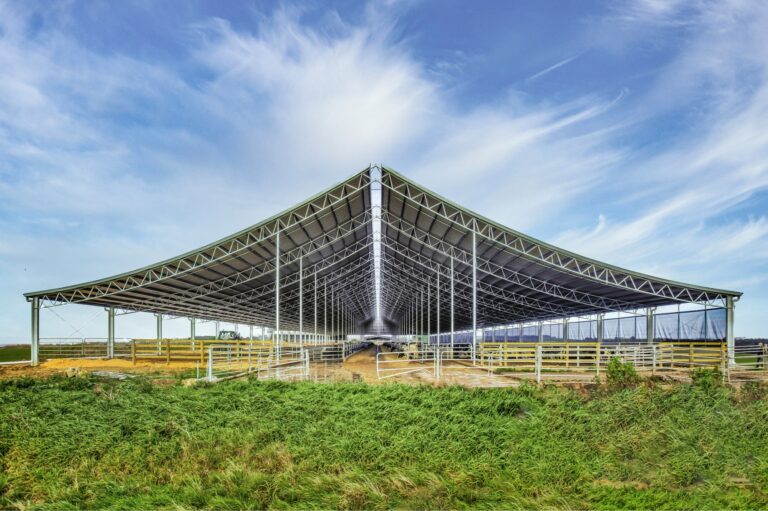
Third-generation dairy farmer Matt Glowrey is now rearing 1200 calves under the shelter of a new Entegra Ridgeback® shed. 

For him, protecting the businesses’ youngest animals from hot northern Victorian summer days and keeping them dry during winter makes financial sense. 

“Having healthy calves in our dairy business is integral to the end-point which is making milk,” he said.  

“If we can grow a stronger, healthier calf fast – at the start of her life – and maintain that growth throughout its life, it will be a bigger, healthier cow when she has her first calf.  

“So ultimately from that fact alone, we will be having a better cow in the herd so more dollars in our pocket.” 

The 150- metre long and 32-metre-wide Ridgeback® houses a mixture of heifer and bull calves with Matt noticing a difference in the first sheltered calves almost immediately. 

“We put 200 calves in there just prior to Christmas, in the summertime,” he said.  

“Ultimately nothing changed with the management of those calves, everything was the same, their pen size, they had the same pellets and water…nothing had changed, whatsoever. The only difference was they had the shade structure and airflow and those calves changed within a week. It was amazing. They were probably the best calves, and we’ve been rearing good calves, but with these calves, it was amazing the difference the removal of that heat made for them.” 

Research supports heifer growth 

In 2013 Dairy Australia estimated it cost $1300 to $1500 to rear a dairy heifer to the point of calving at two-years-old. 

The industry research, development and extension organisation said that a heifer should be 85 per cent of her mature weight when she calves for the first time for optimum health – including fertility – and increased production. 

If a heifer doesn’t reach this weight by two-years-old, and instead calves six-months later at 30-months-old, her rearing costs increase $266 to a total between $1566 and $1766. 

Dairy Australia said this means the average cost of rearing a heifer is reduced if the average age of first calving is reduced. 

For Matt, at his Swan Hill farm, heifer productivity comes down to early and sustained growth. 

He wants all his young stock to perform, and to achieve this, it’s meant improving the tail-end calves.  

“We did a hell of a lot of drafting during the drought, offering the bottom-end of the calf mob to China for export,” Matt said, 

“We would have drafted thousands of animals and you’d go through a mob and get to the bottom and think ‘why are you here? I’ve just spent a year-and-a-half to two years getting you to this point and you are not what I want’.” 

“Obviously the genetics are already there, and the story isn’t over when they leave the shed, we have to maintain their growth until they calve, but it’s about getting everything right at the start too, when they come in.” 

Management made easier 

The Glowreys have always reared “good” calves according to Matt – even if they were housed in an old dairy, a disused piggery, hay shed and outdoor pens – as the farm business grew. 

But now, Matt believes the Ridgeback® will provide the final piece of their calf-rearing puzzle to grow even groups of healthy calves, ultimately improving the tail-end. 

Feeding quality colostrum to calves in their first few days of life has always been a priority for the Glowrey dairy business. 

But now, with the Ridgeback®, this is much easier to manage. 

“We have two full-time people in the shed all year-round,” Matt said. 

“Then we have 0.5 of a labour unit working around the edges, maintaining, and testing the quality of the colostrum that comes into feed all the calves to ensure they have the best possible immunity. That person is also responsible for identifying any veterinarian work or health issues that come up.” 

An autumn downpour of 70mm recently proved the value of the Ridgeback®. 

“Normally if the calves were outdoors, we’d have to deal with bedding and wet feed and all that sort of thing,” Matt said. The shed just maintains that health of the calves and we are rearing better calves, that are putting more weight on earlier. It’s also easier to manage because it is all under one roof. You can easily justify it (the shed) by seeing how well the calves are growing.” 

Growing family business 

Glowrey Dairies is a 1600 cow, year-round milking operation run across nearly 2023 hectares near Swan Hill. 

Matt works on farm with son Dallas and daughter Josie- who is also studying agriculture at La Trobe University.  

In 2013 the family set to double the size of their business and they have achieved this, along with their plan to boost self-sufficiency. 

They grow corn, pasture, vetch and cereals for hay and silage, making the most of the recent years with low irrigation water prices and increased land availability.  

Grain continues to be bought-in, as well as some corn silage and vetch hay, but Matt said prioritising feed self-sufficiency was important for business sustainability. 

“It takes the bumps out of our budget because when there is a pinch in feed prices, such as during drought or high-water prices, the cost of fodder at least doubles and it leaves quite a big shortfall in our budget,” he said. 

“So, if we can at least even that out it’s a huge win as fodder is one of our biggest expenses.” 

Capitalising on beef demand 

Another business change has included rearing all their Holstein bull calves to supply the beef restocker market. 

For the past three years they have reared these bulls until they are three-to-five months of age. 

They’ve retained some to grow-out further and sold the rest. 

Their Holstein bulls have gone to beef restockers as far away as the New South Wales-Queensland border and to South Gippsland in Victoria’s east. 

Matt said producing “dairy-beef” has diversified their income and increased their revenue. 

“It’s costing us around $250 to get calves to weaning,” he said. 

“The heifers stay on, and the bulls have been going out anywhere from $600-$800 at three-to-four months of age.” 

This strong demand for dairy-beef in recent years is a stark contrast to the historical market for dairy bull calves. 

“We used to get $50 at five days old or sell them at three months for a bit over the cost of production,” Matt said. 

“There was no value in doing that, so then you’d have to hold onto them for 12 months and that’s a long time to have an extra animal on the property, especially in a year when there’s high feed costs. 

“Now we are getting a reasonable margin over feed costs, and we are using any excess milk – waste milk from the dairy that’s not suitable for sale – for the calves and supplementing them with milk powder if we need. We are converting milk that would have been thrown-out into something that’s increasing our revenue and improving our bottom-line.” 

The Entegra Ridgeback® has also made it easier to rear these bull calves as they are treated” no differently” to the heifers. 

Set-up for success 

Matt isn’t sure what the future will hold for his family business but is confident that if it expanded, they’d have right calf rearing facilities to handle growth – regardless of what the Mother Nature throws at them. 

Describing the shed as “luxurious”, he said nothing compares to a “purpose built” structure designed specifically for livestock. 

“For us airflow and shade were a critical part of this design,” he said. “If you want to build a hay shed put hay in it, don’t build a hay shed and put calves in it. That’s my advice. When people ask ‘why that design? Why a Ridgeback®?’ That’s what I say. We are going to put stock in there, so our number one priority is shade and airflow. If we don’t have airflow, we don’t have healthy calves.” 

Points for breakout box (if required) 

Calf shelter pays dividends 

– Entegra Ridgeback® houses 1600 calves 

– Calf growth has improved with the shade and shelter 

– Glowrey family rear all their bull calves for the dairy-beef market 

– The farm has grown and is now focusing on self-sufficiency  

See Other Projects

Contact Us Now