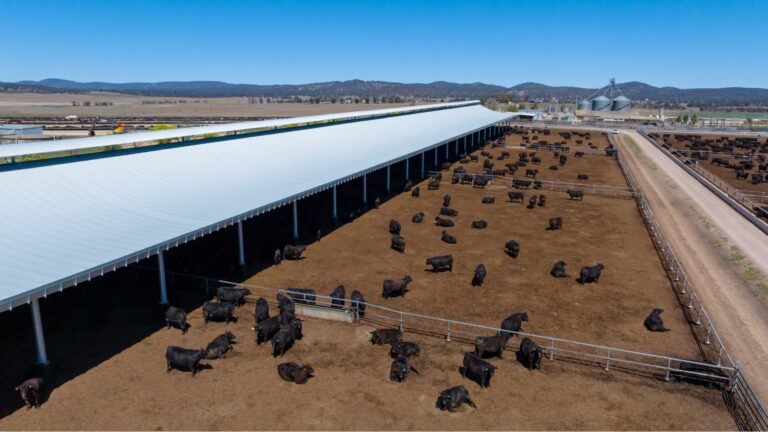
Covered Feeding Trial at Teys Charlton Set to Answer Some Big Questions
When cattle arrive at the Teys Australia Victorian feedlot, they are now divided for scientific purposes.
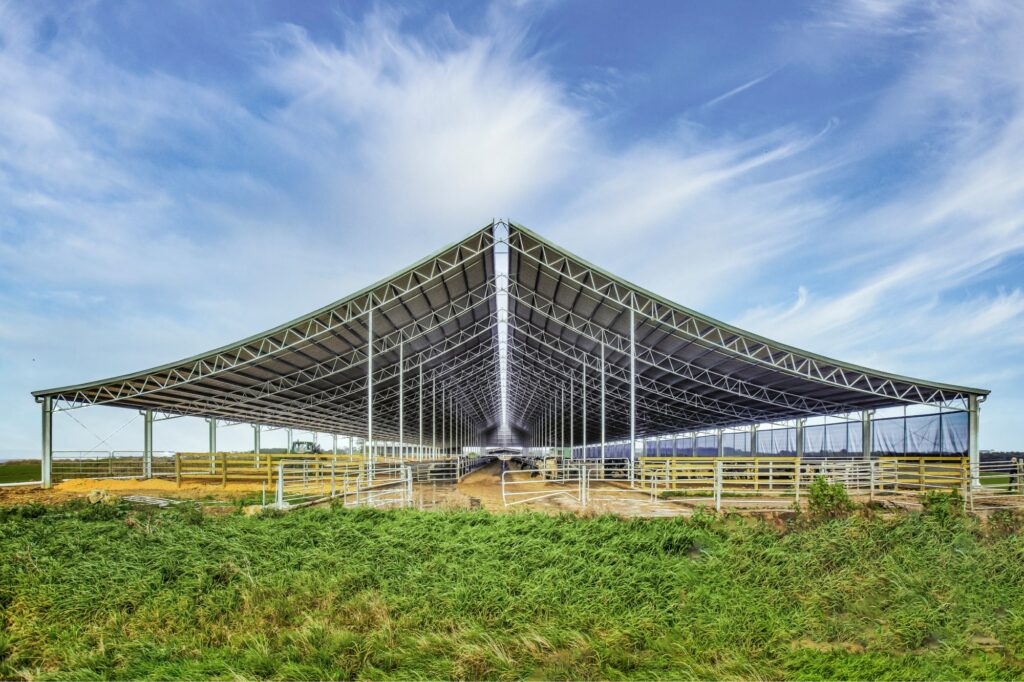
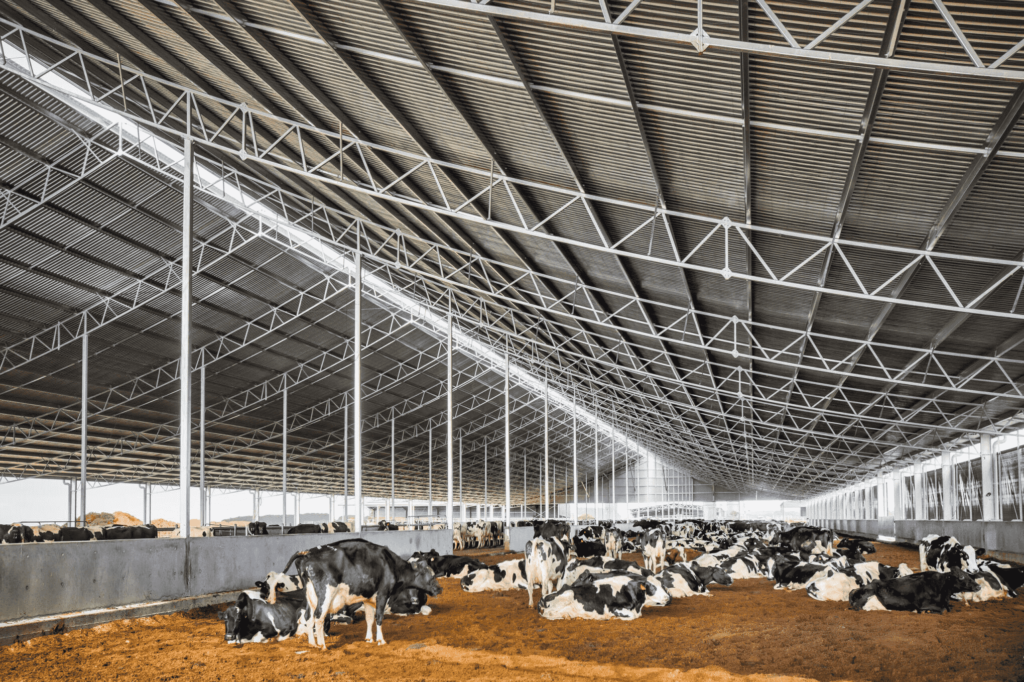
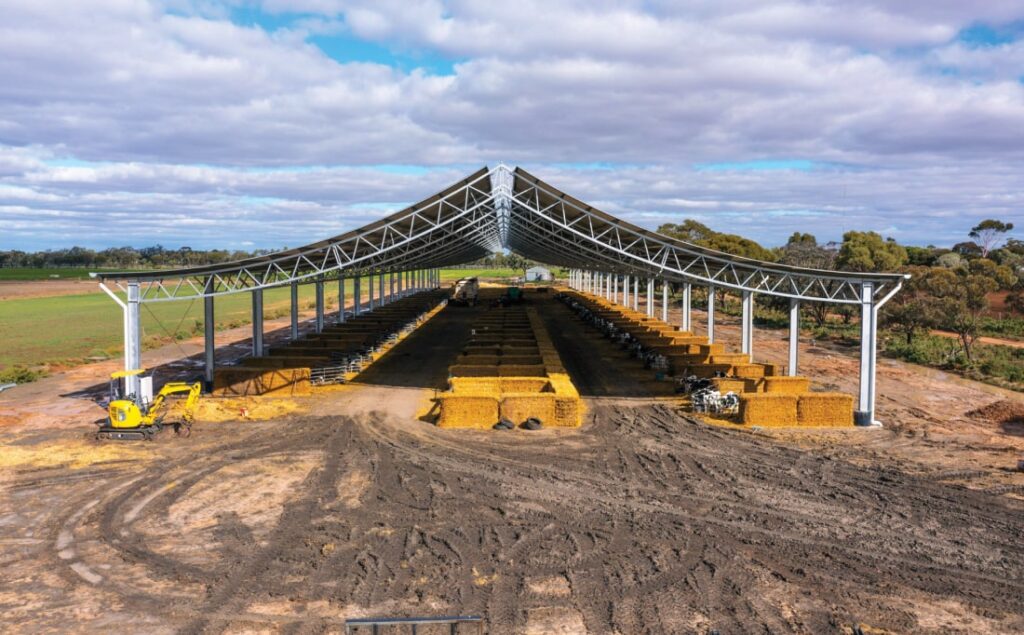
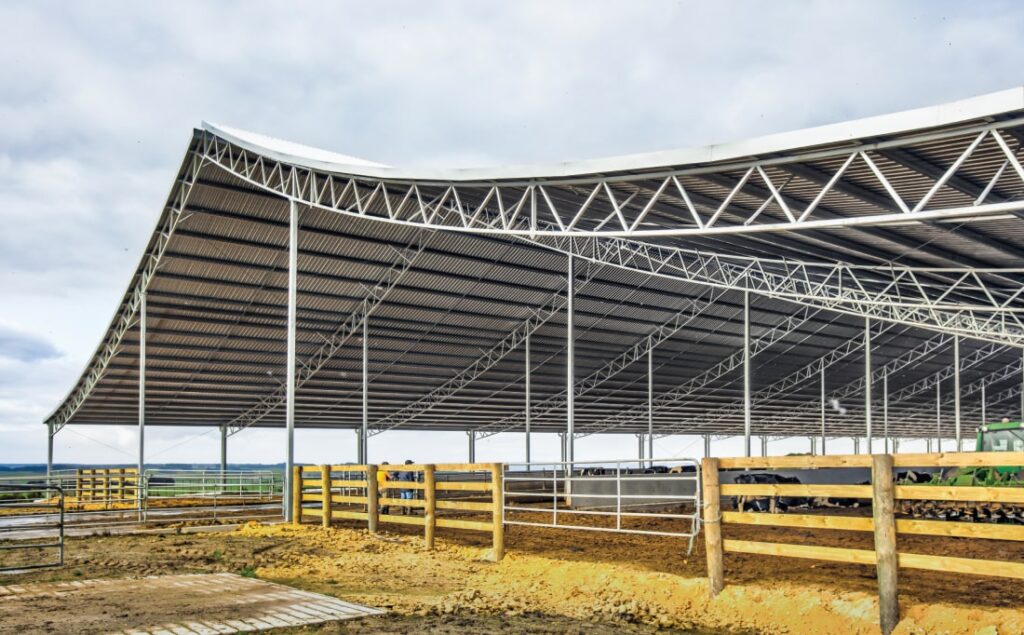
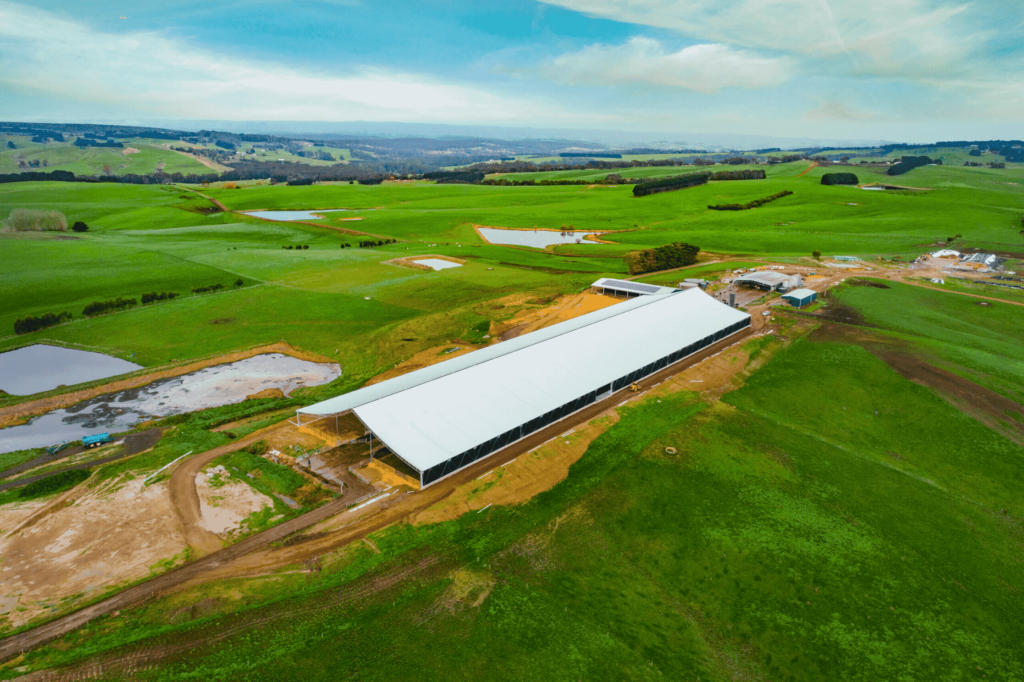
In dairy farming, productivity is closely tied to the well-being of your herd. Dairy barns can be a strategic investment. These structures enable better feed management, reduce wastage, and provide a controlled environment for high-production cows, especially those calving year-round. The right infrastructure, like the innovative Ridgeback®, can play a pivotal role in enhancing milk production and herd health.
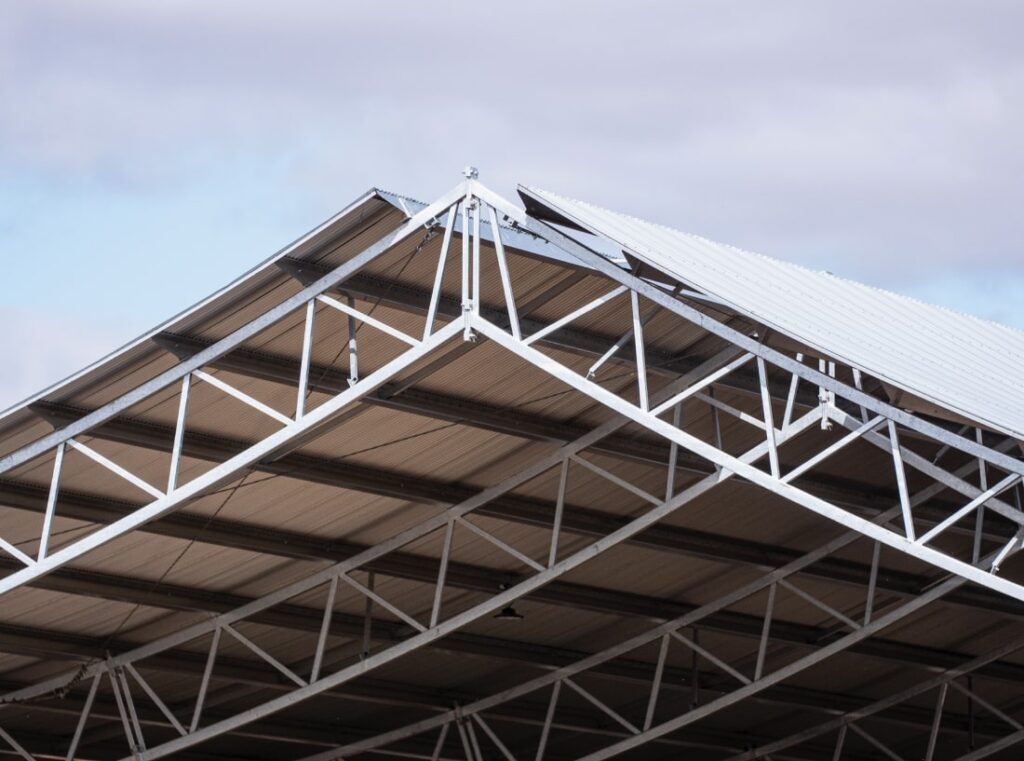
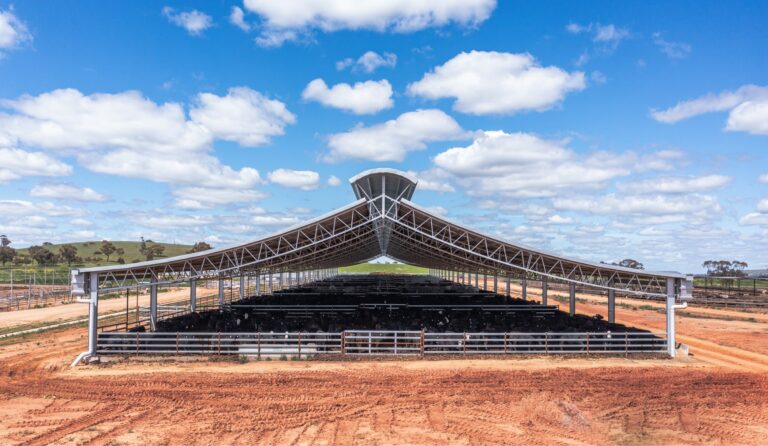
Design and Engineering optimised from site visits and consultation.
Average Overhead Costs for Victorian TMR Farms
| 2016/17 $/kg MS |
2017/18 $/kg MS |
2018/19 $/kg MS |
2019/20 $/kg MS |
2020/21 /kg MS |
|
|---|---|---|---|---|---|
| EMPLOYED LABOUR | 0.99 (0.61 to 1.38) |
0.87 (0.43 to 1.20) |
0.89 (0.59 to 1.20) |
0.89 (0.41 to 1.27) |
0.96 (0.66 to 1.66) |
| REPAIRS AND MAINTENANCE | 0.41 (0.17 to 0.33) |
0.37 (0.29 to 0.44) |
0.42 (0.31 to 0.55) |
0.38 (0.25 to 0.50) |
0.37 (0.28 to 0.51) |
| ALL OTHER OVERHEADS | 0.22 (0.16 to 0.72) |
0.20 (0.12 to 0.27) |
0.24 (0.19 to 0.28) |
0.20 (0.14 to 0.26) |
0.20 (0.12 to 0.28) |
| IMPUTED LABOUR | 0.45 (0.16 to 0.72) |
0.39 (0.14 to 0.65) |
0.35 (0.10 to 0.61) |
0.30 (0.09 to 0.54) |
0.29 (0.09 to 0.53) |
| DEPRECIATION | 0.25 (0.12 to 0.41) |
0.26 (0.16 to 0.37) |
0.25 (0.13 to 0.35) |
0.24 (0.11 to 0.38) |
0.23 (0.12 to 0.34) |
| TOTAL OVERHEAD COSTS | 2.32 (1.70 to 3.06) |
2.10 (1.53 to 2.80) |
2.14 (1.74 to 2.62) |
2.02 (1.70 to 2.51) |
2.06 (1.70 to 2.47) |
| *Between 2016/17 and 2020/21, corrected for infation. The tenth and ninetieth percentiles are shown in brackets. Source: Agriculture Victoria and Dairy Australia |
|||||
Average Overhead Costs of Northern Victorian DFMP Farms
| 2016/17 $/kg MS |
2017/18 $/kg MS |
2018/19 $/kg MS |
2019/20 $/kg MS |
2020/21 /kg MS |
|
|---|---|---|---|---|---|
| EMPLOYED LABOUR | 0.54 (0.15 to 1.01) |
0.53 (0.12 to 0.94) |
0.59 (0.26 to 0.86) |
0.56 (0.18 to 0.99) |
0.59 (0.17 to 0.93) |
| REPAIRS AND MAINTENANCE | 0.37 (0.24 to 0.51) |
0.35 (0.18 to 0.49) |
0.35 (0.17 to 0.54) |
0.31 (0.19 to 0.46) |
0.38 (0.26 to 0.53) |
| ALL OTHER OVERHEADS | 0.27 (0.17 to 0.44) |
0.28 (0.16 to 0.45) |
0.30 (0.17 to 0.52) |
0.30 (0.17 to 0.46) |
0.29 (0.19 to 0.42) |
| IMPUTED LABOUR | 0.86 (0.44 to 1.54) |
0.86 (0.43 to 1.56) |
0.93 (0.42 to 1.77) |
0.83 (0.39 to 1.54) |
0.79 (0.35 to 1.58) |
| DEPRECIATION | 0.24 (0.11 to 0.48) |
0.22 (0.12 to 0.38) |
0.22 (0.11 to 0.38) |
0.21 (0.12 to 0.30) |
0.24 (0.14 to 0.36) |
| TOTAL OVERHEAD COSTS | 2.29 (1.65 to 2.90) |
2.24 (1.68 to 2.89) |
2.39 (1.72 to 3.25) |
2.21 (1.59 to 3.13) |
2.30 (1.73 to 3.07) |
| *Between 2016/17 and 2020/21, corrected for infation. The tenth and ninetieth percentiles are shown in brackets. Source: Agriculture Victoria and Dairy Australia |
|||||
Total Mixed Ration (TMR) farms had an average gross farm income of $0.19/kg of milk solids more than the average Dairy Farm Monitor Project northern Victorian farms in 2020-21.
The TMR farms recorded higher gross incomes for three of the five years of the economic analysis.
Some of the higher TMR feed costs were offset by increasing water and feed inventories.
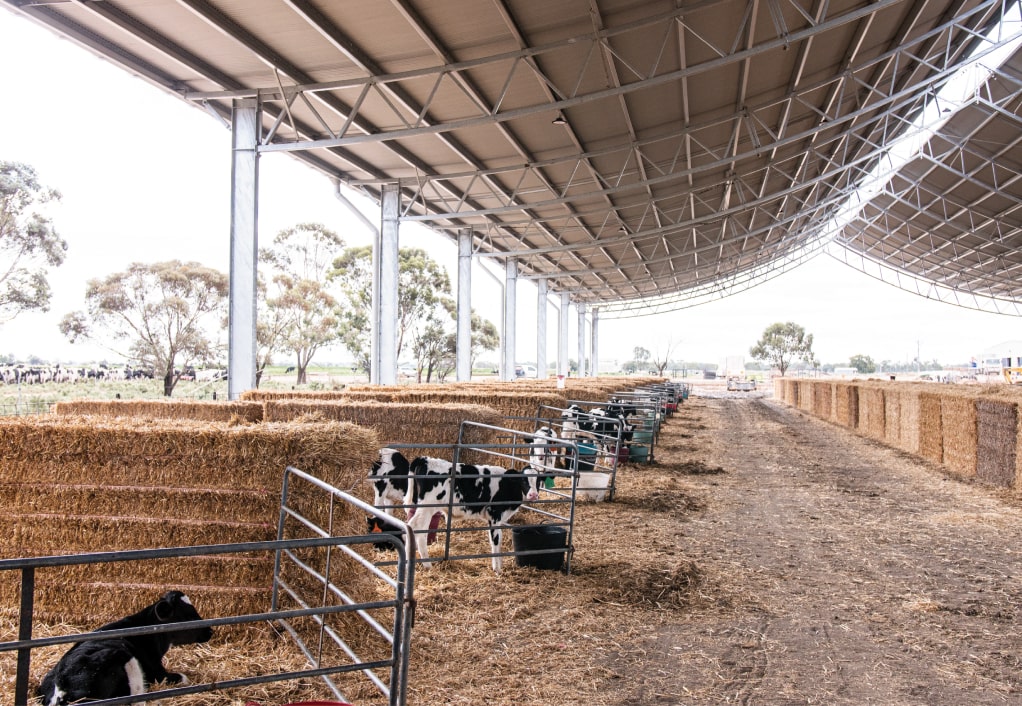
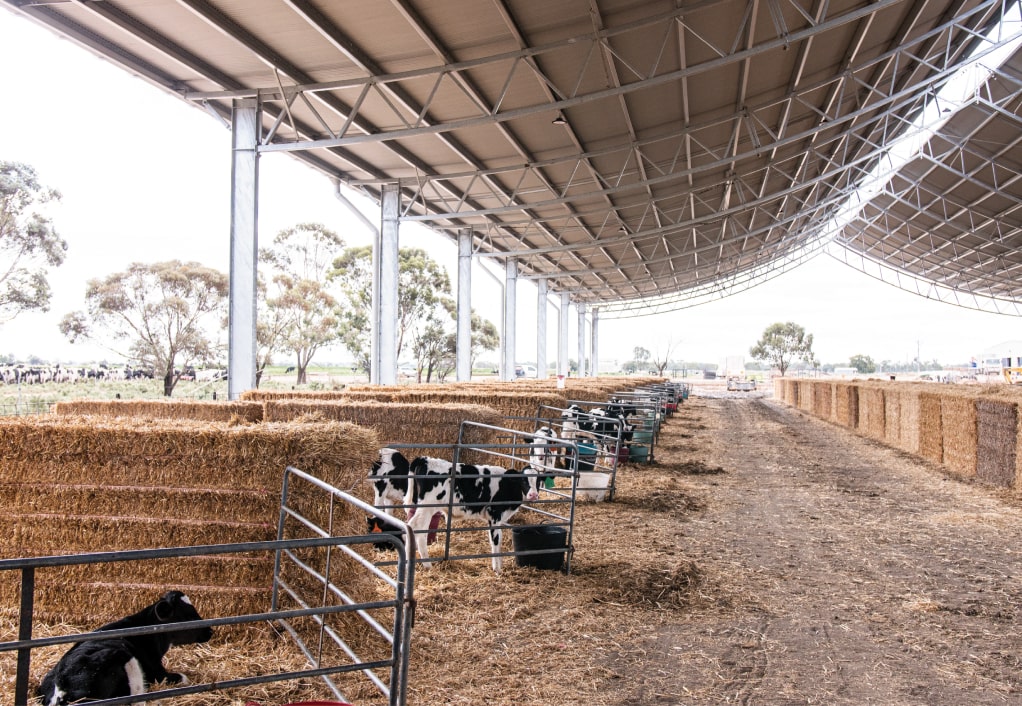
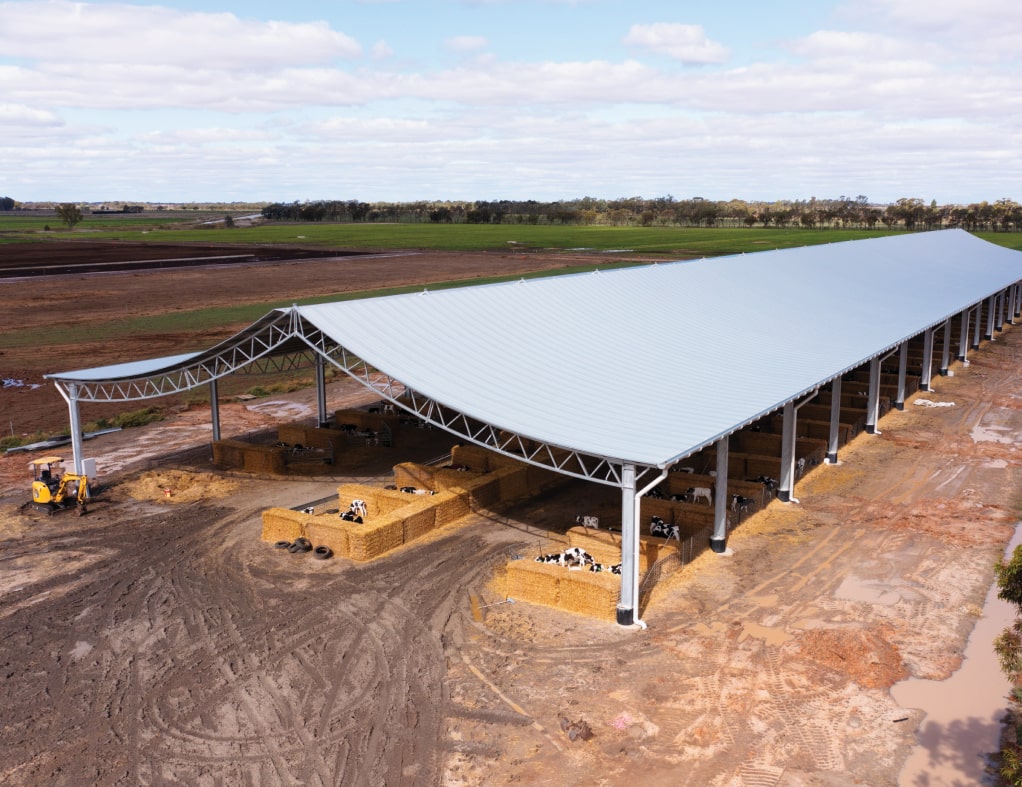
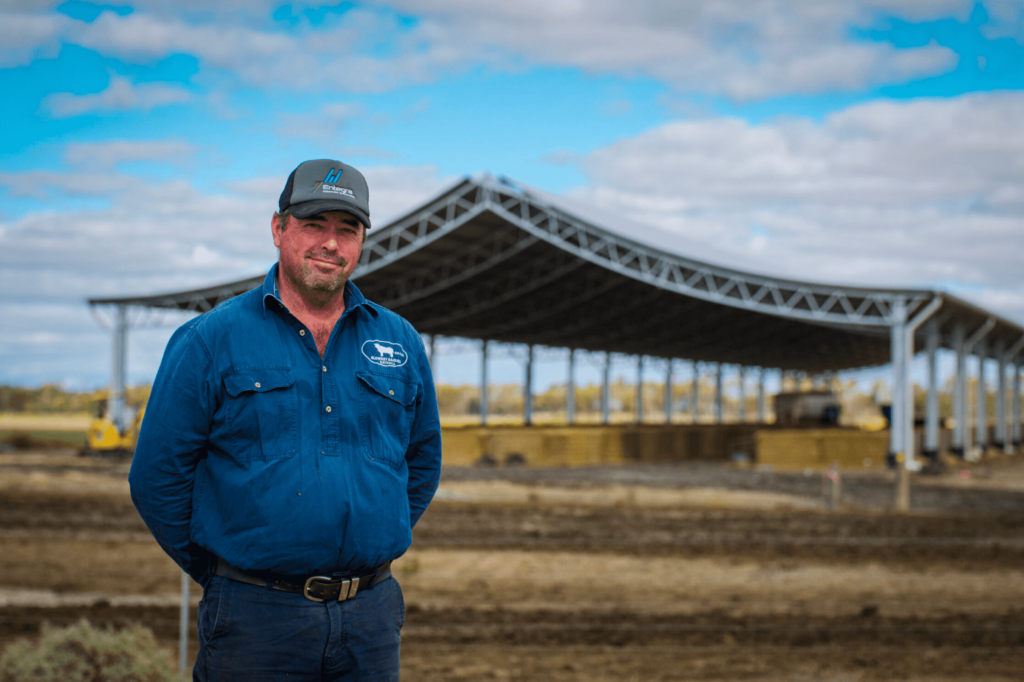
In 2022, Matt wasn’t sure what the future would hold for his family business but he was confident that if it expanded again, his family would have the right calf rearing facilities to handle growth – regardless of what Mother Nature throws at them. He said the Ridgeback® is “luxurious”and nothing compares to a “purpose built” structure designed specifically for livestock. “If we can grow a stronger, healthier calf fast – at the start of her life – and maintain that growth throughout its life, it will be a bigger, healthier cow when she has her first calf,” he said.

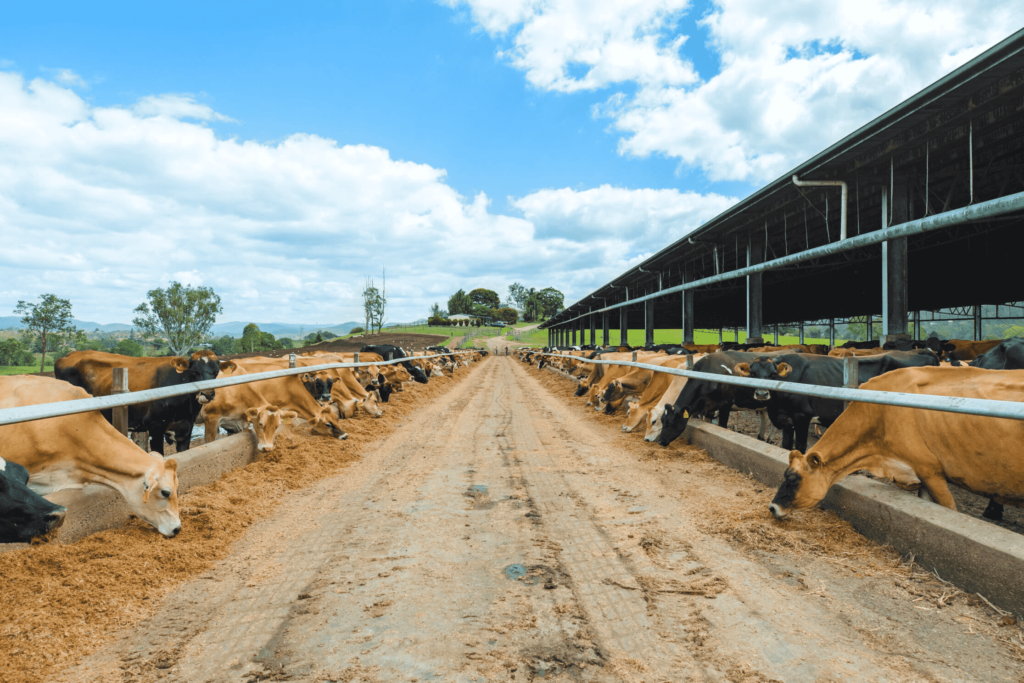
When cattle arrive at the Teys Australia Victorian feedlot, they are now divided for scientific purposes.


Cattle emerge from thick fog, walking along the yard rails in a big group.Next come the pen riders. They are rugged-up.
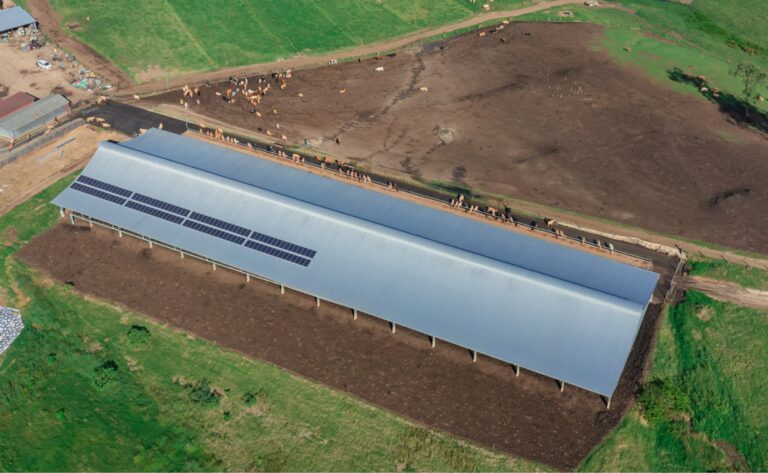
Big producing Australian dairy cows are more susceptible to heat stress than ever before, but scientists have proven that a multifaceted approach is the best way to stem milk losses.
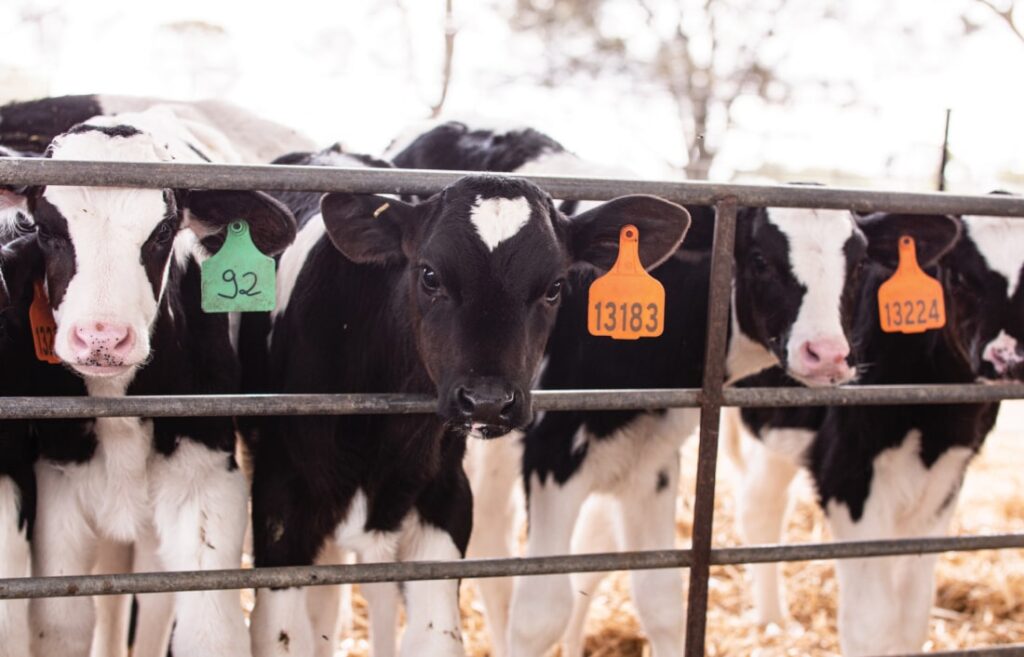
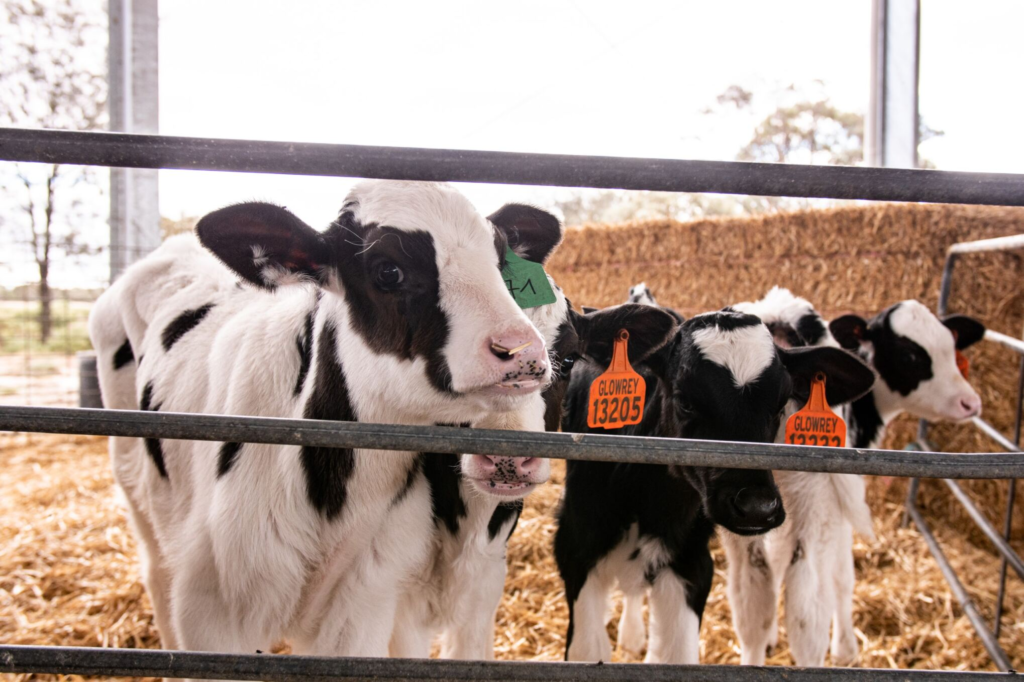
“Having healthy calves in our dairy business is integral to the end-point which is making milk,” he said. “If we can grow a stronger, healthier calf fast – at the start of her life – and maintain that growth throughout its life, it will be a bigger, healthier cow when she has her first calf. “So ultimately from that fact alone, we will be having a better cow in the herd so more dollars in our pocket.”
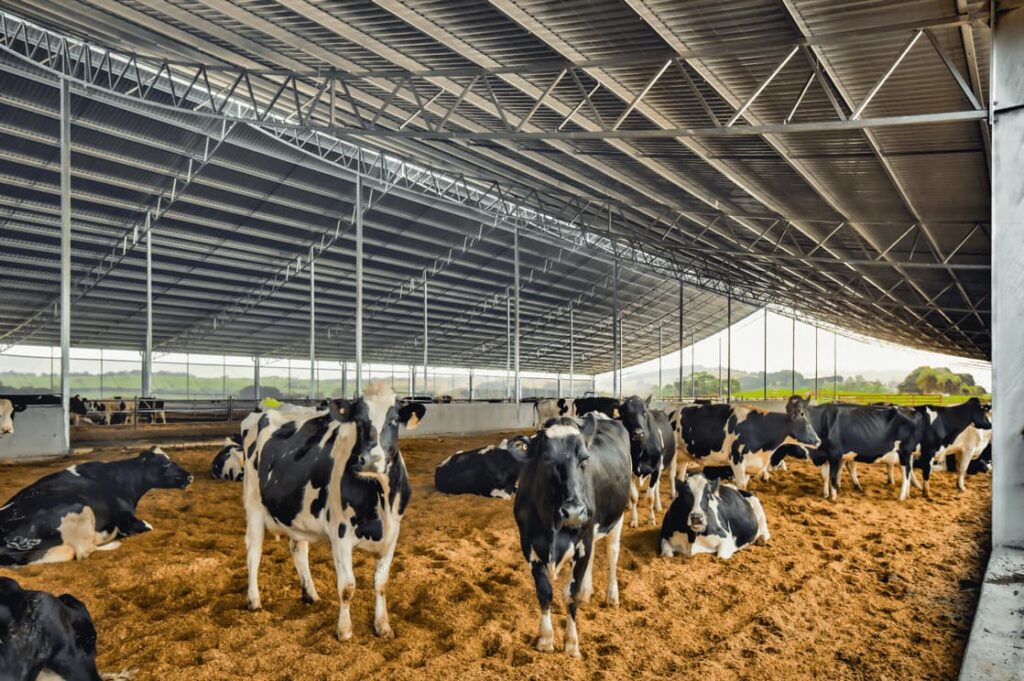
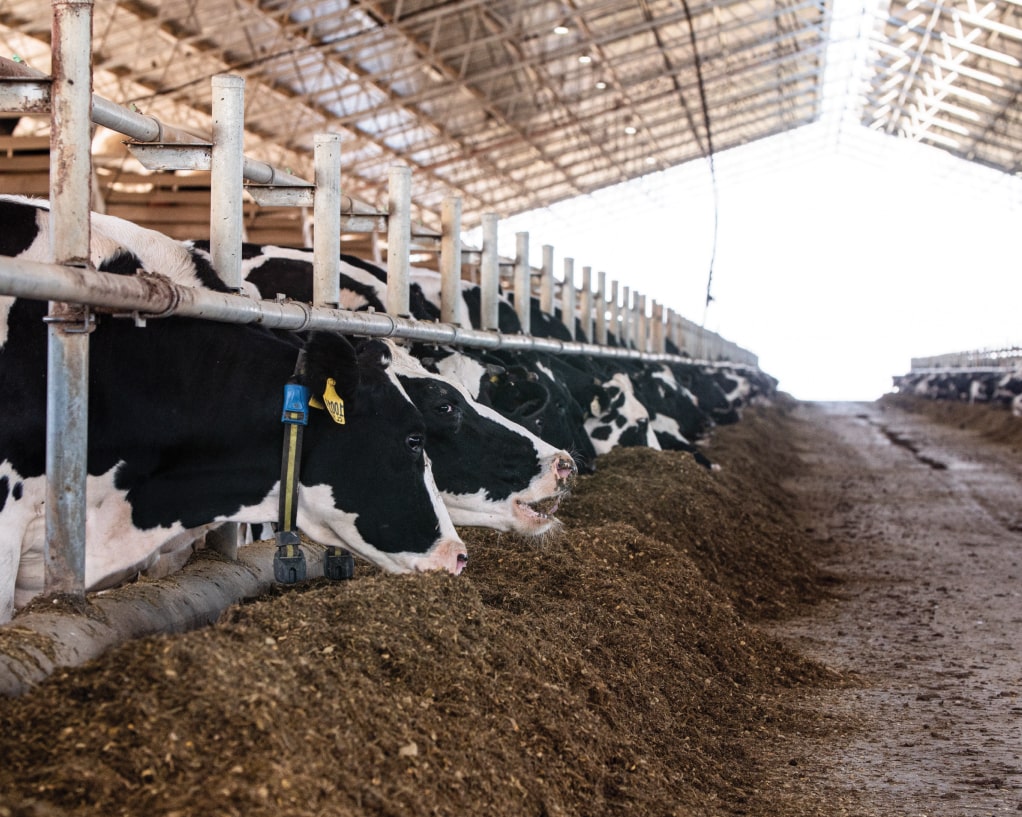
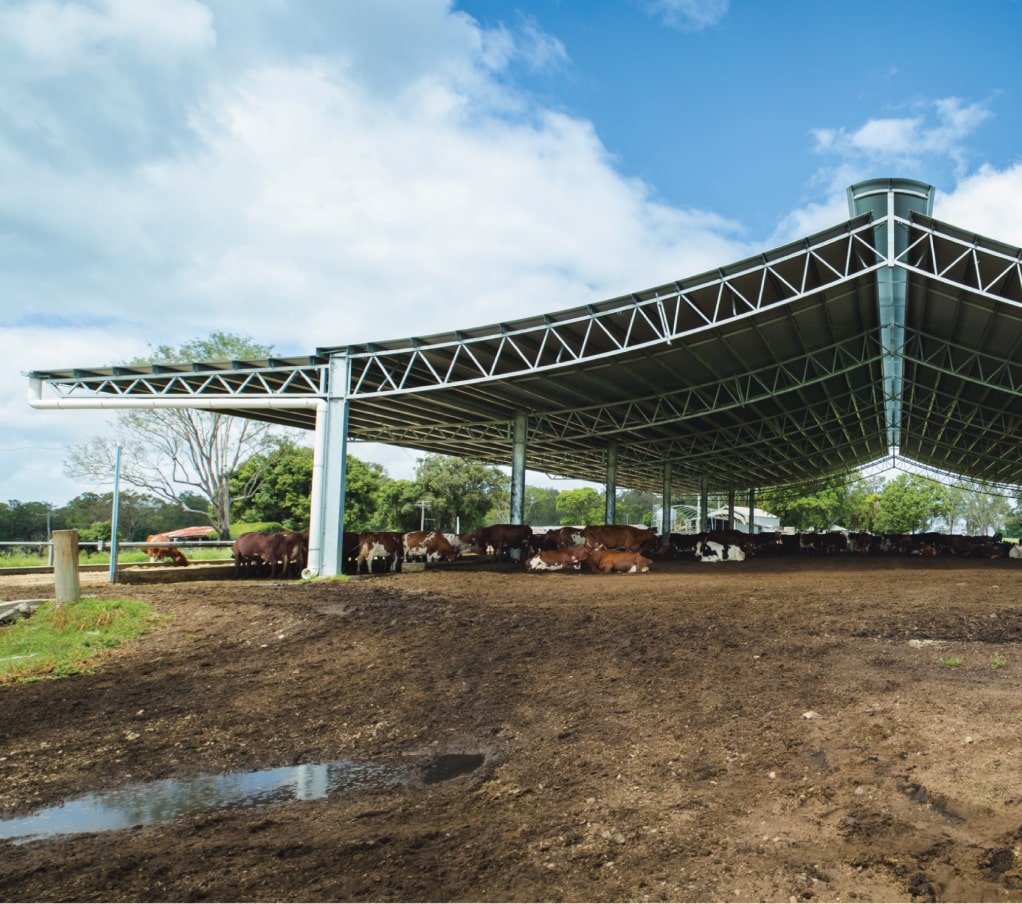
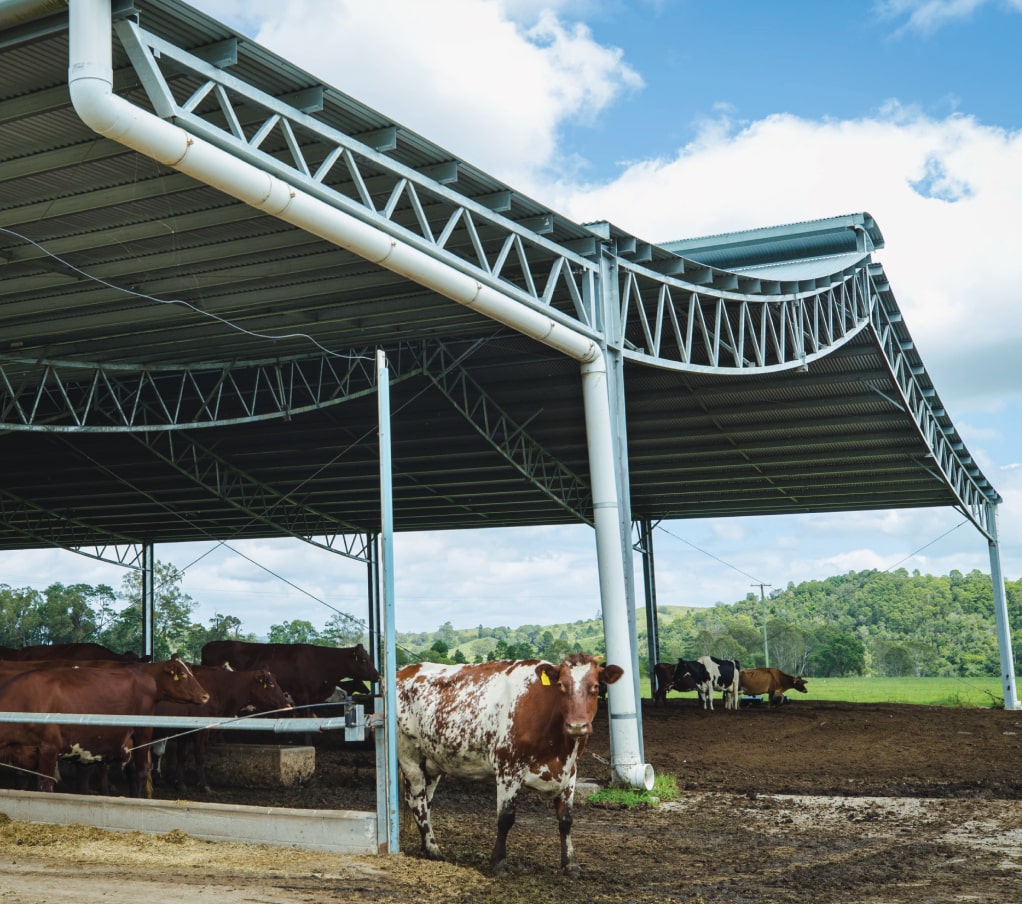
Through summer you get 40 degree days and the troughs are out in the open, they get direct sunlight and algal bloom. We try and mitigate that through trough blocks and cleaning troughs twice a week, however, there will also be a temperature rise in that water. Eight hundred kilo cattle don’t handle those sorts of environmental factors, there’s crowding and panting. However, standing underneath a Ridgeback™ , with the design, there’s a constant airflow, you get a nice, cool breeze. There’s a significant difference in the maximum day time temperature.”
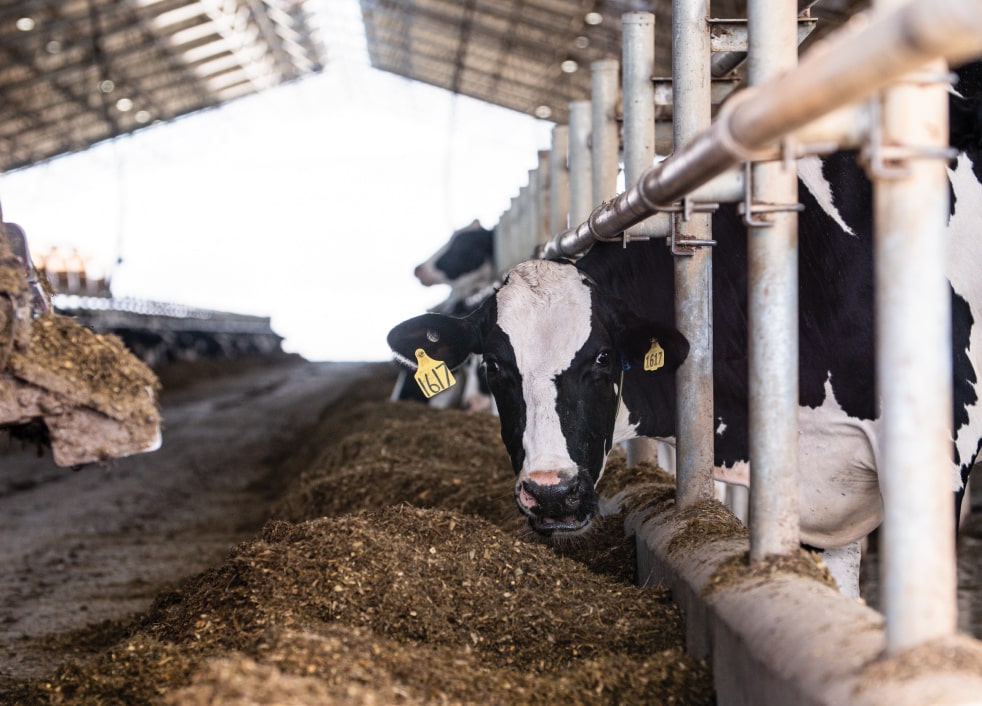
“Happy cows produce more milk, it is as simple as that.” “And the cheapest feed we produce is what’s out in the paddocks, but in our climate they can’t graze all day long. It is too hot. That’s why when they are able to come back to the Ridgeback, it has made a big difference to how comfortable our cows are and the amount of feed our cows will eat.”
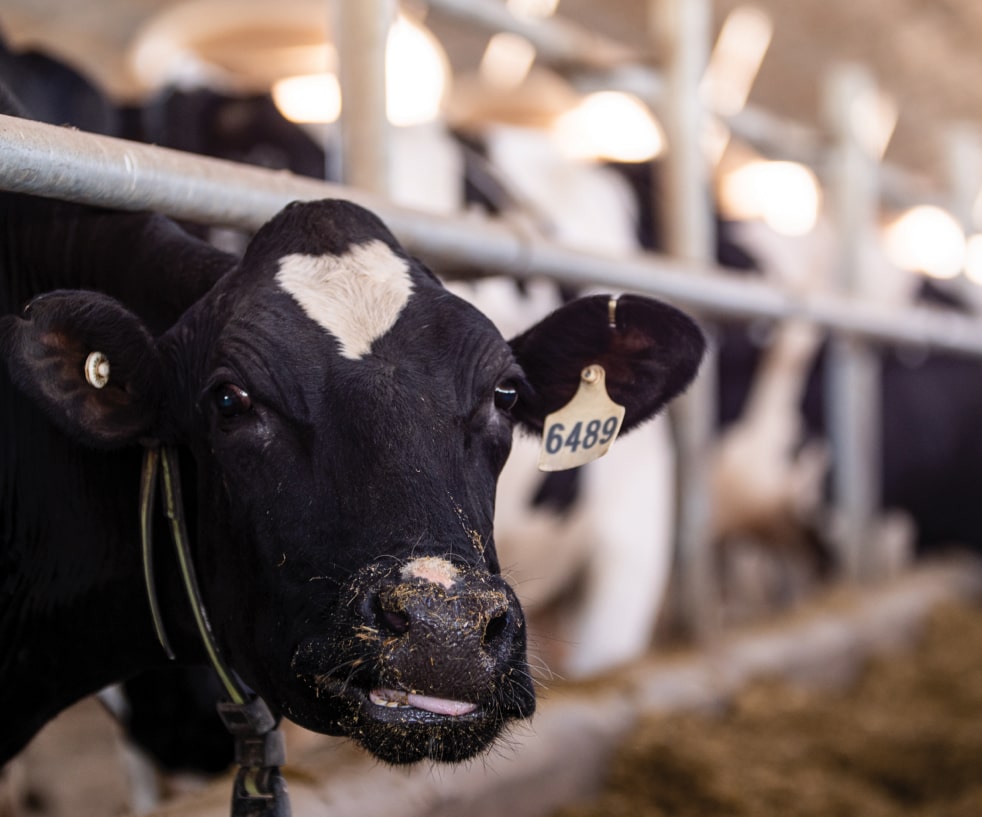
“The test (butterfat and protein) went up immediately,” Chad said. “There was a 0.2 per cent average increase across the fat and protein. They were eating more feed, obviously because they were more comfy. We had budgeted on the milk (litres) going up but didn’t budget on the test going up.”
“There were key drivers in improvement in hot standard carcass weights, improvements reflected in animal health - lower morbidity and mortality rates,” “We also were considering that our wood chip program, for bedding, that we have for our heavier cattle, there could be some offsets or (opportunities to) reduce that bedding structure in various depths because of the result of having a shelter structure. “So adding all those components up, and pen maintenance throughout the year - pens having less water, less erosion - that should reduce our maintenance costs.”
“We look at feeding efficiency, carcass weight and the animal’s health.” “With bedding in the shed, there’s less mud on the cattle,” “It’s a comfort thing and also for the (processing) plant, they won’t have to spend as much time washing the animal prior to slaughter.”
Improving milk production, cow fertility and comfort are the main drivers for farmers
looking to invest in a Ridgeback®. Often, these farmers also want to maximise water
usage by growing fodder crops and their paddocks and feeding them back to their herd
in a Total Mixed Ration (TMR) system. Weather is also a deciding factor in building a
Ridgeback®. Dairy farmers want to protect their herds’ from wet, hot or cold conditions
to maximise their farm productivity.
There’s no “right” system for a Ridgeback®, farmers with a range of different feeding systems and farm sizes have success with a Ridgeback®. For example, many farms operating a Total Mixed Ration (TMR) build a Ridgeback® to further control their cows’ diet and comfort, while also using pastures to produce feed. Partial Mixed Ration (PMR) farms have also used a Ridgeback® to maximise cow comfort and milk production potential, while grazing dairy farms use the shelter of a Ridgeback® to provide protection during the hottest or coldest parts of the day when it’s wet.
Yes, the Ridgeback® ventilation system is engineered to significantly enhance air exchange. Aerospace engineers have rigorously tested the design to ensure its effectiveness in providing excellent ventilation within the shelter. This innovative ventilation system is a key feature that contributes to the overall quality and performance of the Ridgeback®.
To understand the Ridgeback® and its suitability for your dairy farm, the best step is to schedule a call with an experienced Entegra team member. They can provide you with valuable insights and information about the Ridgeback®. Additionally, if needed, they can arrange a site visit to assess how the Ridgeback® can best meet the specific requirements of your dairy farm, ensuring a tailored and effective solution for your needs.
The Ridgeback® offers a unique advantage over alternative options like shade sails. While shade sails can provide relief from direct sunlight, they have limitations when it comes to enhancing airflow. A Ridgeback®, on the other hand, has undergone extensive testing and design by aerospace engineers, which has demonstrated a significant improvement in air exchange within the sheltered area. This enhanced ventilation is essential for ensuring the comfort and productivity of cattle, particularly during hot weather conditions.
Bedding varies depending on material availability but most choose to compost floors.
Yes, a Ridgeback® can be tailored to meet individual needs. The experienced Entegra team will work closely with you to understand your unique requirements and design a Ridgeback® that aligns with your goals. Whether you need a shelter for shade, protection from the elements, or other specific purposes, customisation options are available to ensure that a Ridgeback® is the perfect fit for your operation. Contact us to discuss your requirements and explore the possibilities of customisation.